Dermatologist-led reduction of unwanted facial and body hair
Consult Dr. Cheena Langer, MBBS, MD Dermatology, Consultant Dermatologist, for personalised laser hair reduction at Aastha Skin & Dermato-Cosmetic Centre in Jammu.
Treatment is planned according to your skin tone, hair colour, hair thickness, treatment area, medical history and hormonal factors. Laser hair reduction is available at both the Karan Nagar and Paloura branches.
What is laser hair reduction?
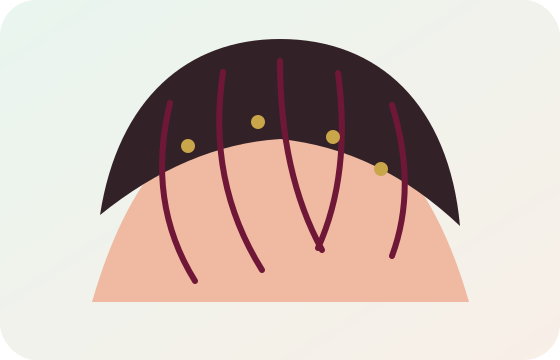
Laser hair reduction is a medical-grade procedure that uses concentrated light to target pigment within suitable hair follicles.
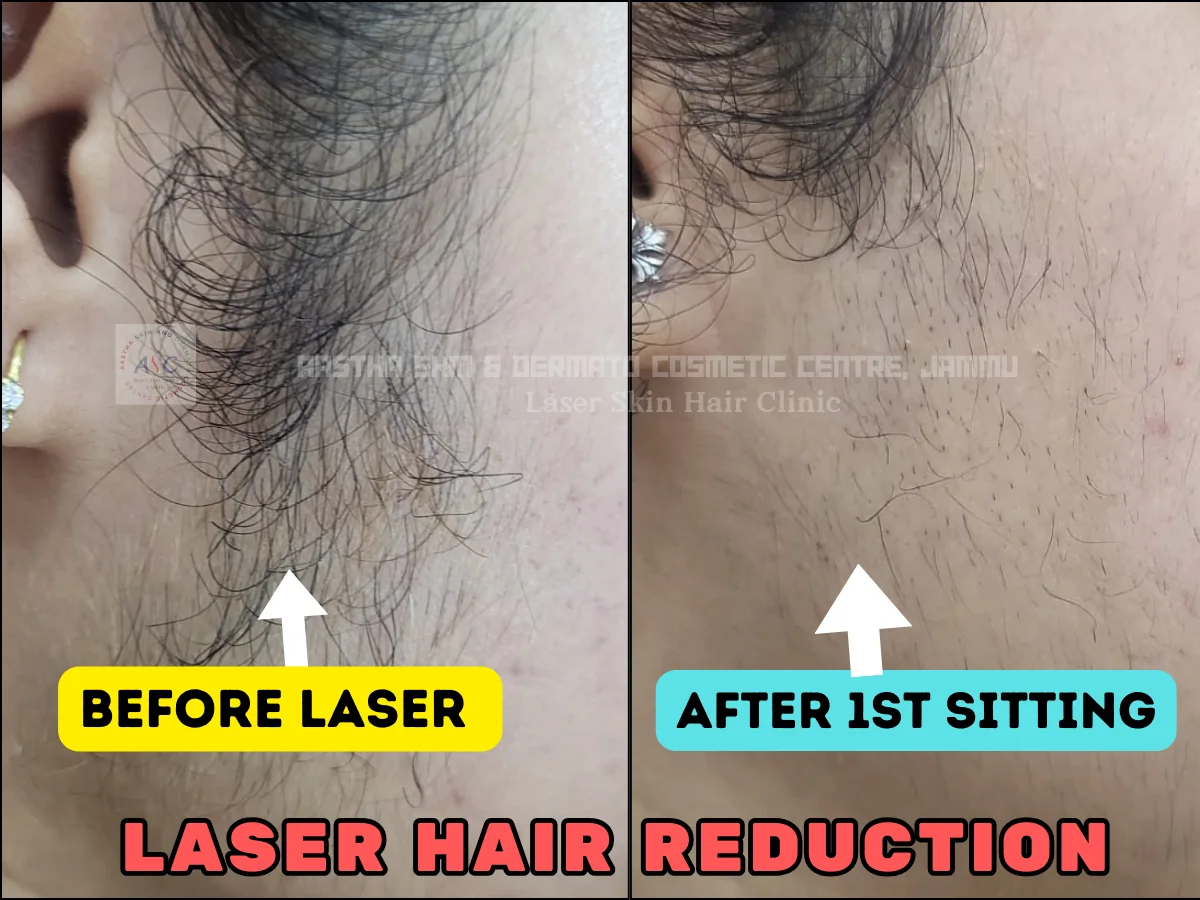
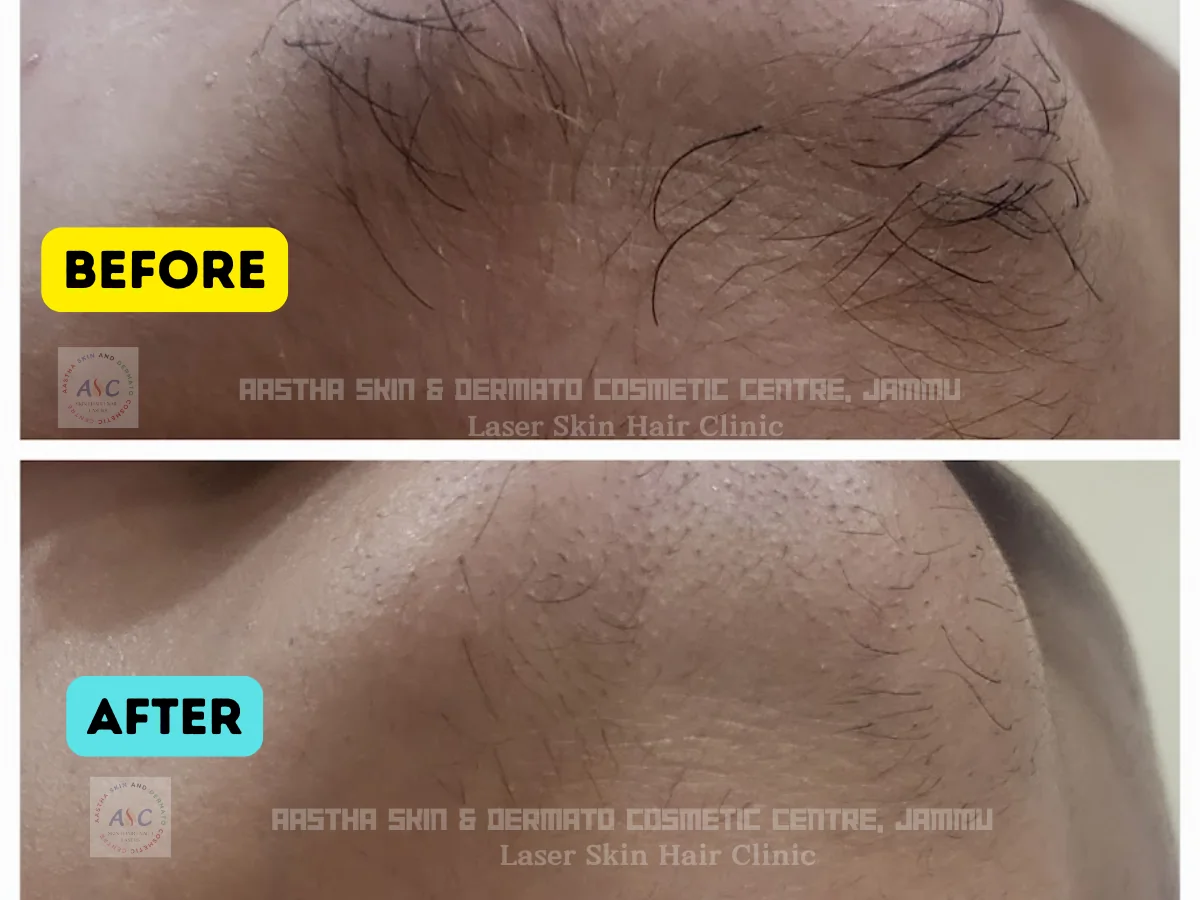
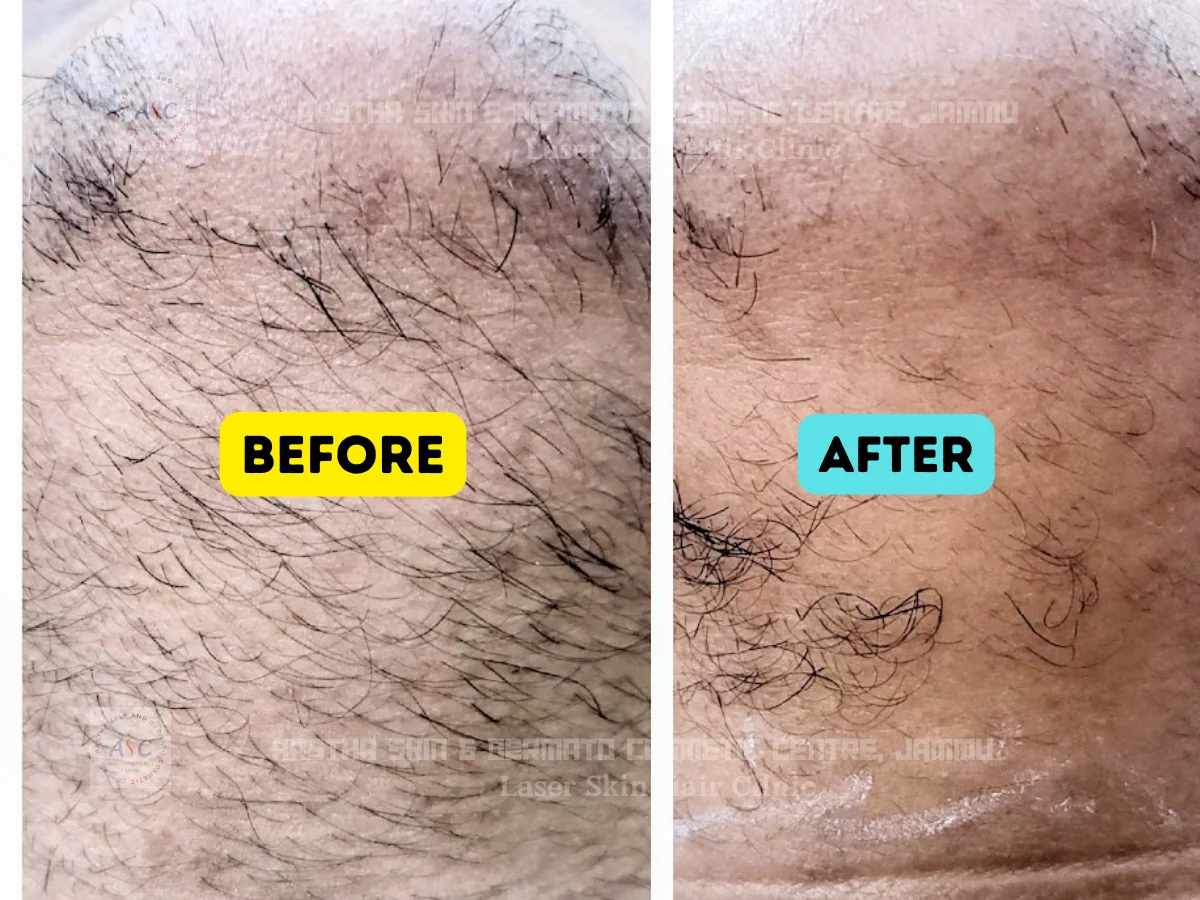
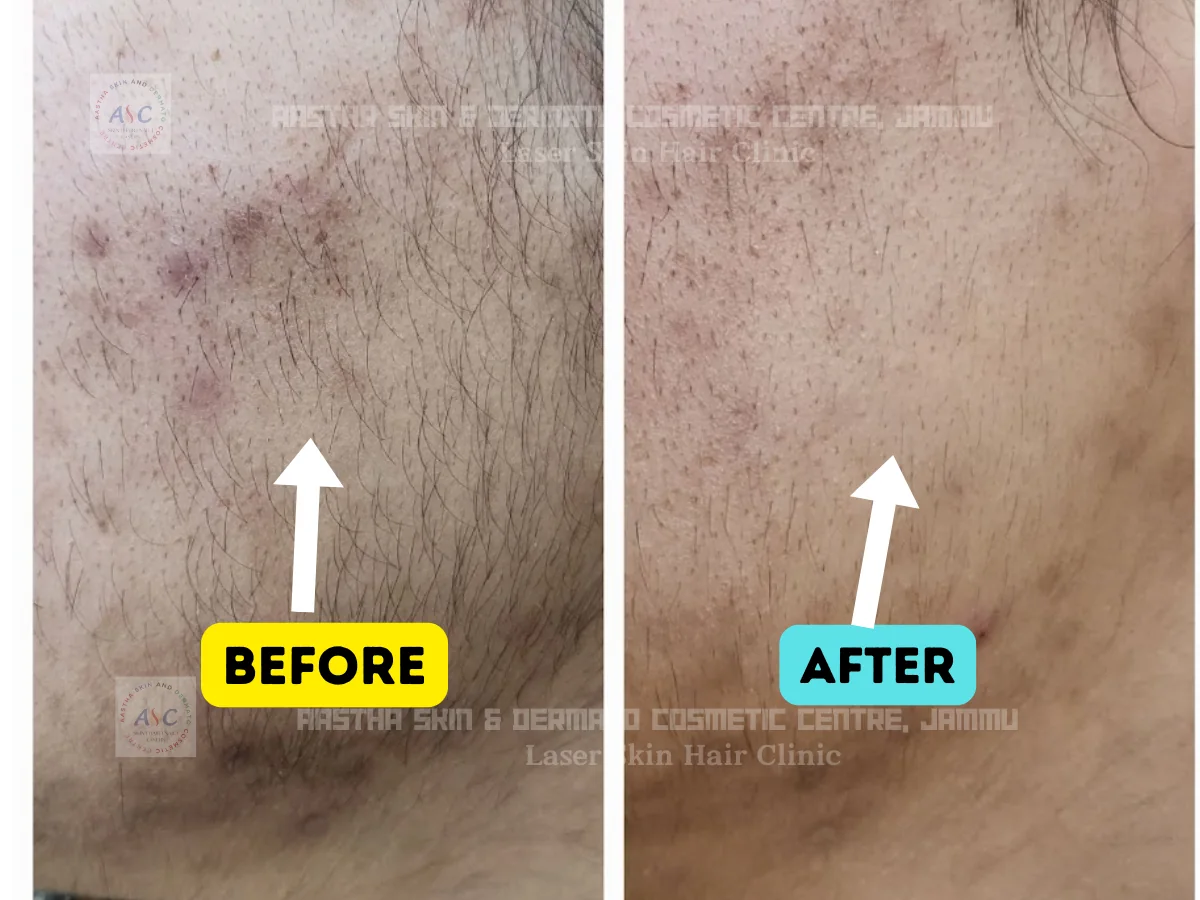
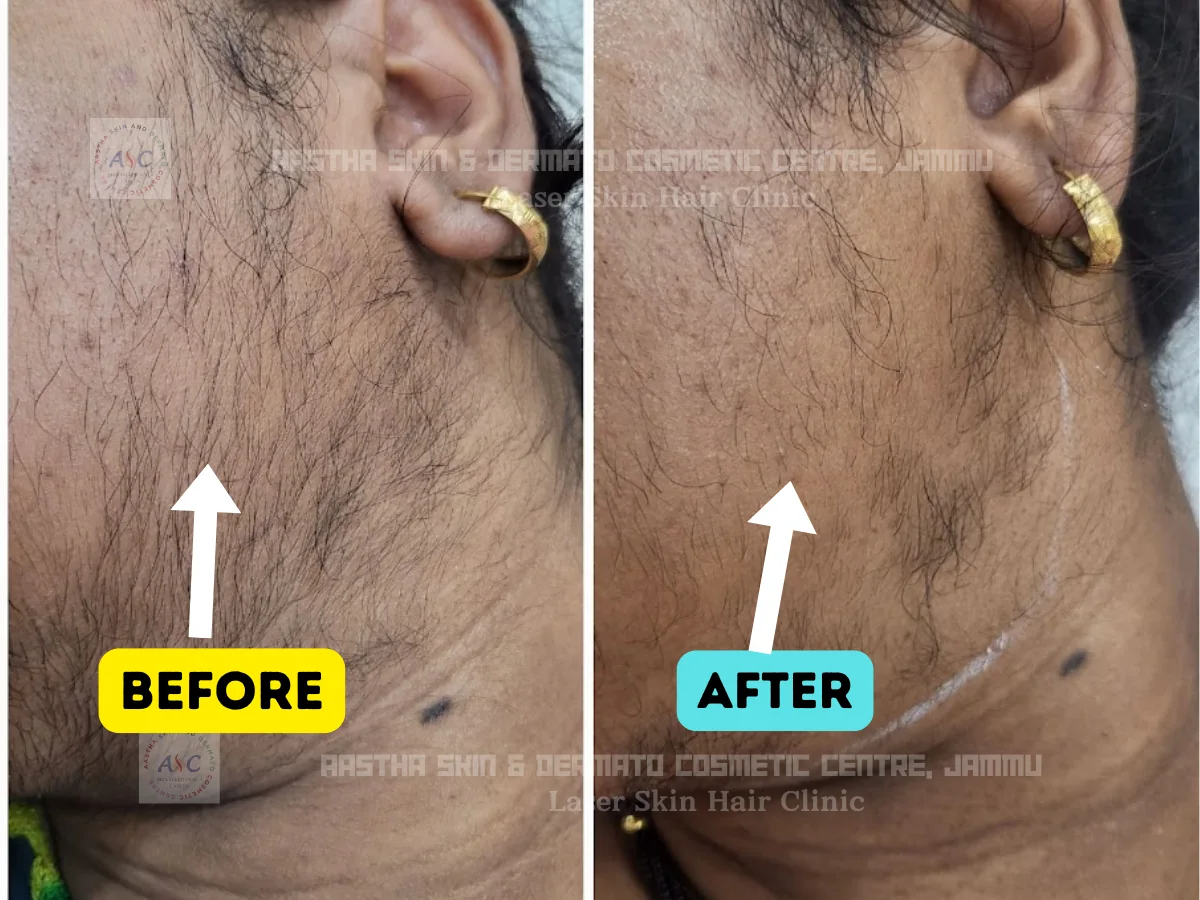
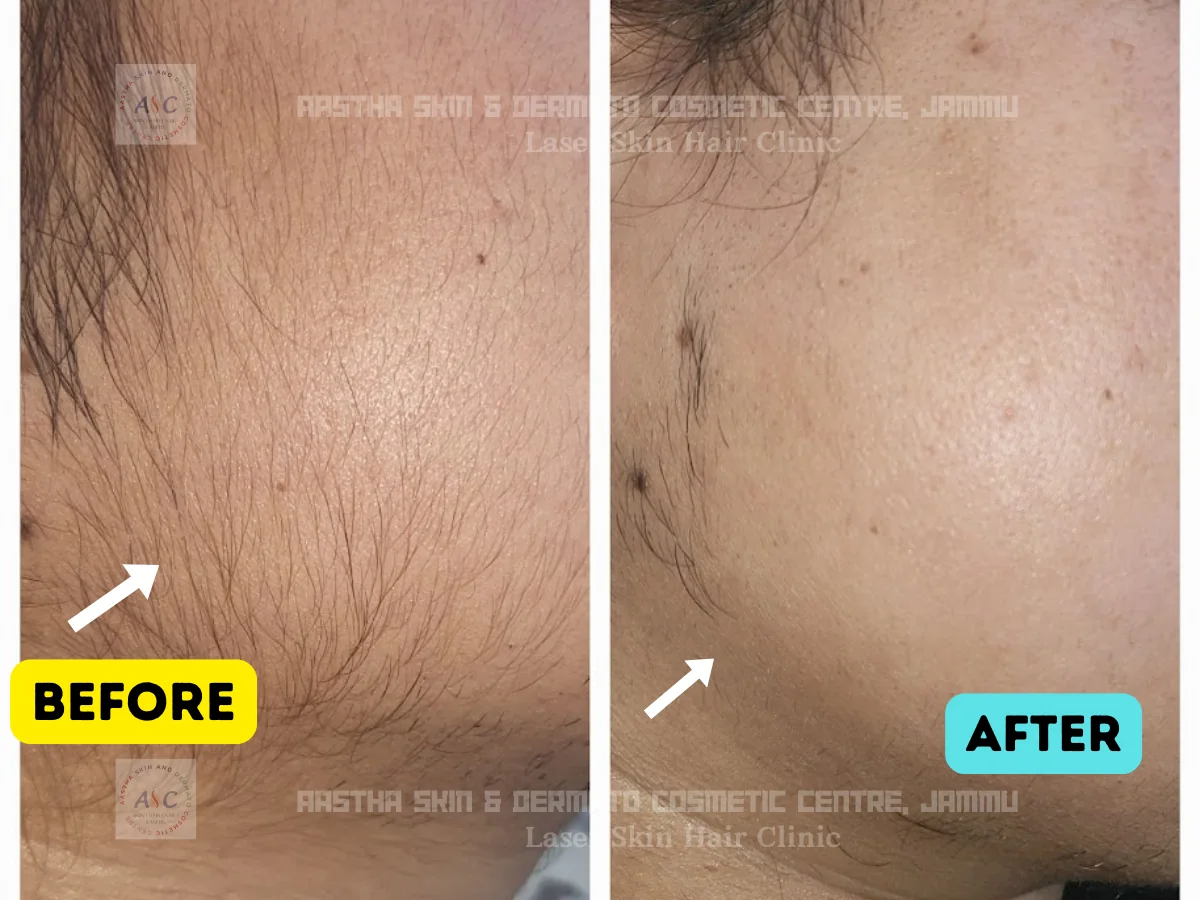
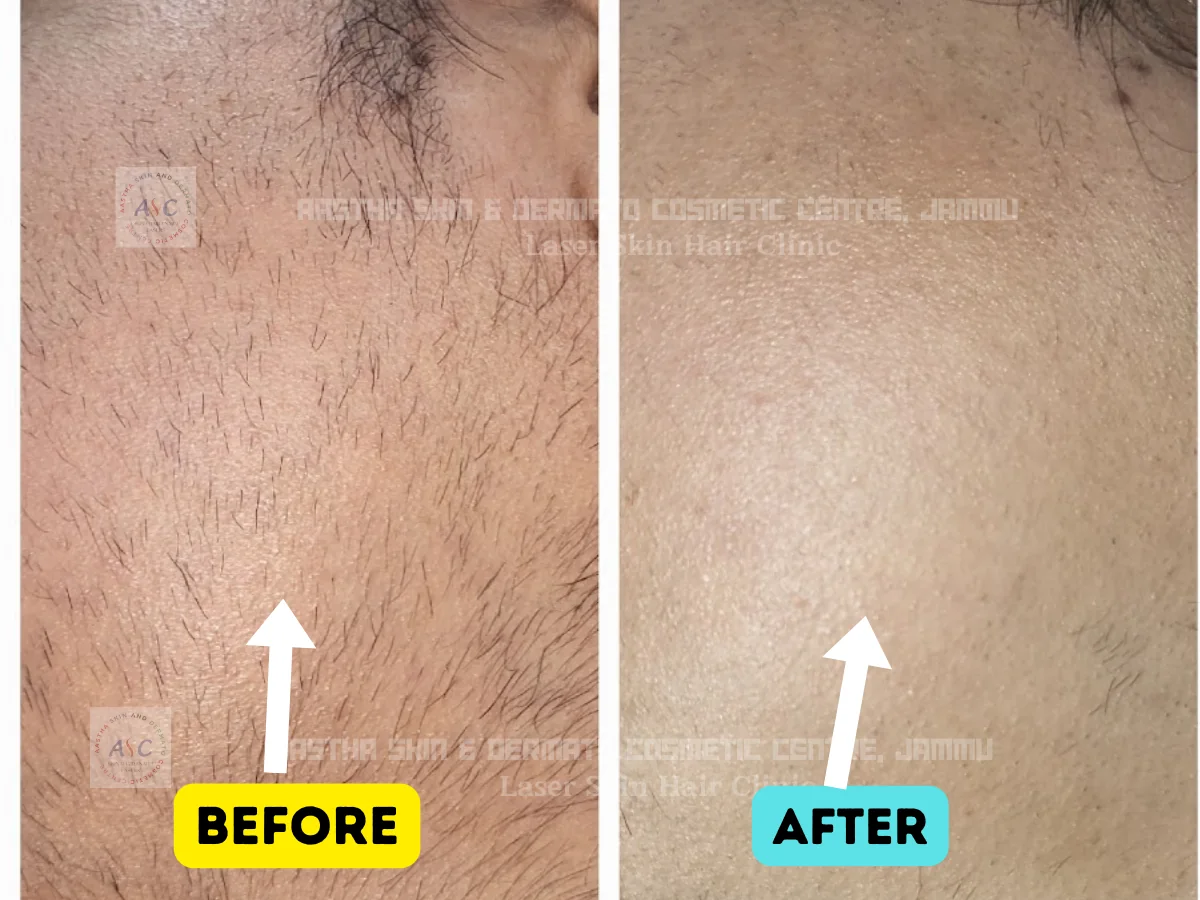
The absorbed energy heats the follicle and can reduce its ability to produce coarse hair. Regrowing hair commonly becomes less dense, finer and lighter after a course of treatment.
The treatment is called laser hair reduction because:
- Not every follicle responds equally
- Hair grows in different cycles
- Hormonal factors can cause new growth
- Maintenance sessions may be needed
- Complete lifelong removal of every hair cannot be promised
FDA device documentation defines permanent hair reduction as a long-term, stable reduction in regrowing hair, not necessarily the complete disappearance of every hair.
How does laser hair reduction work?
Hair contains melanin, the pigment that gives it colour. The laser produces light that is absorbed by this pigment and converted into heat.
That heat affects the hair follicle while the surrounding skin is protected through suitable treatment settings and cooling methods.
The response depends on:
- Hair colour
- Hair thickness
- Skin tone
- Body area
- Hair-growth stage
- Laser parameters
- Hormonal influences
- Previous hair-removal methods
Hair follicles respond most effectively when they are in an active growth phase. Because all hairs are not active at the same time, treatment must be repeated.
Who may benefit from laser hair reduction?
Laser treatment may be considered by people who:
- Are tired of frequent shaving or waxing
- Develop razor bumps
- Experience recurrent ingrown hairs
- Have coarse unwanted facial or body hair
- Develop irritation after conventional hair removal
- Want longer-term reduction in hair density
- Have dark, visible hair suitable for laser targeting
A consultation is required because not every patient or hair type will respond equally.
What happens during the first consultation?
Before treatment, Dr. Cheena Langer or the clinical team may assess:
- Skin tone
- Hair colour and thickness
- Treatment area
- Hair-removal history
- Recent sun exposure or tanning
- Medicines and supplements
- History of pigmentation or scarring
- Active skin infections
- Hormonal symptoms
- Previous laser response
The AAD recommends disclosing recent tanning, keloid tendency, recurrent herpes, isotretinoin use and other medicines before laser treatment.
A test spot may be considered when clinically appropriate.
Types, options and detailed guidance
Why are multiple laser sessions required?
Hair grows through different biological stages. Only a proportion of hairs are in the most responsive growth stage during one appointment.
For this reason, laser hair reduction is performed as a planned course rather than a single treatment.
The American Academy of Dermatology notes that patients often require several sessions, commonly between two and six or more depending on the body area and individual response. Regrowth after treatment is generally finer and less noticeable, and maintenance may later be required.
The exact schedule is decided after assessing:
- Treatment area
- Density of hair
- Hair thickness
- Skin response
- Hormonal pattern
- Previous sessions
Which areas can be treated?
Laser hair reduction may be used for suitable facial and body areas.
- Upper lip
- Chin
- Sideburns
- Jawline
- Neck
- Full face
- Underarms
- Arms
- Forearms
- Shoulders
- Chest
- Abdomen
- Back
- Bikini line
- Legs
- Thighs
- Lower legs
- Toes
- Full body
The AAD lists the face, underarms, chest, back, shoulders, neck, bikini area and legs among commonly treated areas.
Treatment should not be performed too close to the eyes or over unsuitable skin lesions without medical assessment.
Which hair colours respond best?
Laser hair reduction generally works best when there is sufficient pigment in the hair.
Dark, coarse hair often absorbs laser energy more effectively than fine or lightly pigmented hair.
Laser treatment responds poorly to:
- White hair
- Grey hair
- Very light blonde hair
- Some red hair
- Very fine, lightly pigmented facial hair
The AAD notes that lasers cannot effectively target blonde, white, grey or red hair because these hairs contain too little suitable pigment.
Alternative methods may be discussed when the hair is unlikely to respond adequately.
Can laser hair reduction be performed on darker skin?
Yes, laser hair reduction can be performed on many darker skin tones when the device, wavelength, energy settings and cooling method are selected carefully.
Darker skin contains more melanin, so poorly chosen settings can also heat the surrounding skin. This can increase the risk of burns, blistering, dark marks or lighter patches.
The AAD advises that patients with darker skin choose a medical professional experienced in treating their skin tone.
Treatment planning may involve:
- Skin-tone assessment
- Conservative starting settings
- Test spots where appropriate
- Effective cooling
- Careful monitoring of response
- Strong sun-protection advice
Laser research has included many patients with darker phototypes, although the darkest skin types remain underrepresented in some clinical trials.
Does facial hair need a different treatment approach?
Facial hair, particularly on a woman’s chin, upper lip or jawline, can be influenced by hormones.
Laser may reduce suitable coarse facial hair, but new follicles can become active over time. Maintenance sessions may therefore be more important on the face than on some body areas.
Dr. Cheena Langer may ask about symptoms such as:
- Irregular menstrual cycles
- Sudden increase in facial hair
- Acne
- Scalp hair thinning
- Recent weight changes
- Current hormonal medicines
Laser can address the visible hair, but it does not by itself treat an underlying hormonal condition.
How should you prepare before laser hair reduction?
Preparation instructions can vary, but patients may be advised to:
- Avoid tanning
- Avoid sunless tanning products
- Use broad-spectrum sunscreen
- Avoid waxing, threading or plucking before treatment
- Shave or trim the area as advised
- Avoid bleaching the hair
- Inform the clinic about new medicines
- Avoid irritating skincare products when advised
- Report active rashes, cuts or infections
The AAD recommends avoiding tanning and using broad-spectrum, water-resistant sunscreen with SPF 30 or higher before treatment.
Do not apply perfume, deodorant, makeup or heavy creams to the treatment area unless the clinic says they are acceptable.
Should hair be shaved before treatment?
Shaving usually preserves the hair follicle under the skin while removing excess hair above the surface.
Waxing, threading, epilation and plucking remove the hair from the follicle, leaving less pigment for the laser to target.
Follow the clinic’s specific shaving instructions because the preferred timing may differ by area and skin sensitivity.
Do not shave irritated or infected skin without medical advice.
What happens during the procedure?
Before treatment:
- The area is examined and cleaned
- Protective eyewear is provided
- Laser parameters are selected
- Cooling may be used
- Numbing cream may be considered for sensitive areas
During treatment, patients may feel warmth, pinpricks or a sensation similar to a light rubber-band snap. Treatment time depends on the size of the area; a small facial area may take minutes, while legs or the back take longer.
The operator observes the skin response and adjusts treatment only when medically appropriate.
Additional care and practical advice
Is laser hair reduction painful?
The sensation varies according to:
- Treatment area
- Hair thickness
- Skin sensitivity
- Energy settings
- Cooling system
- Individual pain tolerance
Most patients describe temporary warmth, pinpricks or a mild snapping sensation.
Sensitive areas may feel more uncomfortable than the arms or legs.
Comfort varies between patients, so complete painlessness cannot be guaranteed.
Two locations in Jammu
Laser hair reduction is confirmed at both Karan Nagar and Paloura.
Reduce the cycle of shaving, waxing and recurrent irritation, book a laser hair reduction consultation with Dr. Cheena Langer in Jammu.
How care is planned
- Assessment comes before treatment selection.
- Options, limitations, aftercare and expected timelines are explained.
- The plan is adapted to diagnosis, skin type and medical history.
Choose a clinic in Jammu
Karan Nagar
Lane 2, Karan Nagar, near Amphalla Chowk, Jammu – 180005Doctor consultation:
Mon–Sat 11:00 AM–4:00 PM
Sun 11:00 AM–3:00 PM
Paloura Chowk
Top Paloura, opposite Government Senior Secondary School, Jammu – 181121Doctor consultation:
Mon–Sat 6:00 PM–8:00 PM
Sun 10:30 AM–12:00 PM
Frequently asked questions
Is there downtime after treatment?
Most people can return to routine activities after laser hair reduction.
Temporary redness and swelling around the follicles are common and may resemble mild sunburn. These effects commonly settle within a few hours or days.
Patients should follow the clinic’s advice regarding:
- Exercise
- Heat exposure
- Hot showers
- Swimming
- Makeup
- Deodorant
- Active skincare ingredients
- Sun exposure
What aftercare is recommended?
After treatment, patients may be advised to:
- Apply a cool compress if needed
- Use a gentle moisturiser
- Avoid rubbing or scratching
- Avoid direct sunlight
- Apply sunscreen regularly
- Avoid tanning beds
- Pause irritating products temporarily
- Avoid excessive heat when advised
- Follow prescribed aftercare
- Contact the clinic for unexpected blistering or severe pain
AAD guidance emphasises sun avoidance and adherence to the dermatologist’s aftercare instructions.
What side effects are possible?
Common temporary effects include:
- Redness
- Swelling
- Warmth
- Tenderness
- Mild itching
- Follicular bumps
Less common complications may include:
- Blistering
- Burns
- Infection
- Scarring
- Cold-sore reactivation
- Darkening of the skin
- Lightening of the skin
These risks increase when unsuitable settings are used or treatment is performed on recently tanned skin.
A systematic review also identified paradoxical hair stimulation as an uncommon potential complication, seen mainly around facial and neck areas.
How soon will results be visible?
Some treated hairs may shed during the days or weeks following a session.
After each treatment, patients may notice:
- Slower regrowth
- Fewer hairs
- Finer hair
- Softer hair
- Patchier regrowth
- Less frequent shaving
Results vary according to hair colour, thickness, treatment area, skin tone, laser type and individual biology.
The full response should be judged after a properly spaced treatment course rather than immediately after one session.
Will maintenance sessions be needed?
Some patients remain satisfied for long periods after completing a course, while others develop gradual regrowth.
Maintenance may be needed because:
- Dormant follicles become active
- Hormonal patterns continue
- Facial hair is hormone-sensitive
- Some follicles were not fully disabled
- New hair develops with age or medical changes
The AAD notes that maintenance laser sessions may be needed when hair regrows.
Can laser treat ingrown hairs and razor bumps?
Reducing coarse hair can help some patients who repeatedly develop irritation, ingrown hairs or razor bumps after shaving.
However, acne-like bumps may sometimes represent:
- Folliculitis
- Pseudofolliculitis
- Acne
- Infection
- Skin irritation
A dermatologist should confirm the diagnosis before assuming every bump is caused by ingrown hair.
When should treatment be postponed?
Treatment may need to be delayed when there is:
- Recent tanning
- Sunburn
- Active skin infection
- Open wounds
- Significant irritation
- Active herpes in the area
- Recent use of certain medicines
- An uncontrolled skin condition
- Pregnancy-related clinic restrictions
- Inability to follow sun protection
Always inform the clinic about pregnancy, breastfeeding, recent procedures and prescription medicines before treatment.
Get a clear plan for laser hair reduction
Request a consultation with Dr. Cheena Langer at Karan Nagar or Paloura Chowk.
Medical disclaimer: Results may vary from person to person. This content is for informational purposes only and does not substitute a consultation with a qualified medical professional. Dr. Cheena Langer, MD is a registered medical practitioner.