Personalised treatment for active acne, recurring breakouts and acne marks
Consult Dr. Cheena Langer, MBBS, MD Dermatology, Consultant Dermatologist, for diagnosis-led acne treatment at Aastha Skin & Dermato-Cosmetic Centre in Jammu.
Acne can affect the face, chest, shoulders and back. Treatment aims to control existing breakouts, prevent new lesions, reduce the risk of permanent scars and establish an effective maintenance routine.
Acne consultations are available at both Karan Nagar and Paloura.
What is acne?
Acne is an inflammatory condition involving blocked hair follicles, oil production and inflammation. It may appear as blackheads, whiteheads, red pimples, pus-filled spots, painful nodules or cysts.
Acne commonly affects teenagers and young adults, but it can continue into adulthood or begin for the first time later in life. It may affect confidence and emotional wellbeing as well as the skin.
Common signs of acne
- Blackheads
- Whiteheads
- Small red pimples
- Pus-filled lesions
- Painful nodules
- Deep cystic breakouts
- Oily skin
- Post-acne red marks
- Post-acne dark marks
- Acne scars
Not every acne-like eruption is acne. Folliculitis, perioral dermatitis and hidradenitis suppurativa can resemble acne but require different treatment.
What causes acne?
Acne develops through a combination of blocked follicles, excess oil, inflammation and changes in organisms normally present on the skin. Hormonal activity and genetic tendency can also influence its development.
Factors that may contribute to acne or worsen breakouts include:
- Hormonal changes
- Family history
- Oily or pore-blocking products
- Friction from helmets, masks or tight clothing
- Certain medicines
- Stress-related worsening
- Picking or squeezing lesions
- Unsuitable skincare
- Stopping treatment too early
Acne is not simply caused by poor hygiene. Aggressive scrubbing can irritate the skin and may make inflammation worse.
When should acne be examined by a dermatologist?
Consider a dermatology consultation when acne:
- Is painful or deep
- Is leaving scars
- Causes persistent dark marks
- Affects the chest or back extensively
- Does not improve with basic care
- Keeps returning
- Begins suddenly in adulthood
- Causes emotional distress
- Is associated with irregular periods or unwanted hair growth
- Is being treated repeatedly with antibiotics without lasting control
- Appears different from typical acne
NICE guidance recognises the importance of acne severity, scarring, treatment response and the condition’s psychological effect when planning care or considering specialist referral.
How does Dr. Cheena Langer assess acne?
An acne consultation may include:
- Examining the type and distribution of lesions
- Assessing acne severity
- Checking for marks and scars
- Reviewing previous medicines and products
- Asking about menstrual or hormonal symptoms where relevant
- Reviewing current medicines and medical history
- Identifying irritation caused by skincare
- Discussing the effect of acne on confidence and daily life
- Planning active treatment and maintenance
Tests are not required for every patient. Blood tests or hormonal assessment may be considered when the history or examination suggests an underlying issue.
How is acne treated?
There is no single treatment that is suitable for everyone. Treatment depends on acne type, severity, body area, age, pregnancy considerations, previous response and tendency to develop scars.
Types, options and detailed guidance
Comedonal acne
Comedonal acne mainly causes blackheads and whiteheads because pores become blocked.
Inflammatory acne
Inflammatory acne causes red, tender or pus-filled pimples.
Nodular or cystic acne
Deep nodules and cysts can be painful and have a higher risk of permanent scarring.
Teenage acne
Acne commonly develops around puberty because hormonal changes affect oil production.
Adult acne
Acne may persist into adulthood or begin later, particularly around the lower face, jawline and chin.
Hormonal-pattern acne
Breakouts may follow a cyclical pattern or be associated with other hormonal symptoms. Medical evaluation may be needed when acne occurs with irregular periods, increased facial hair or scalp thinning.
Body acne
Acne may affect the back, chest, shoulders and upper arms as well as the face.
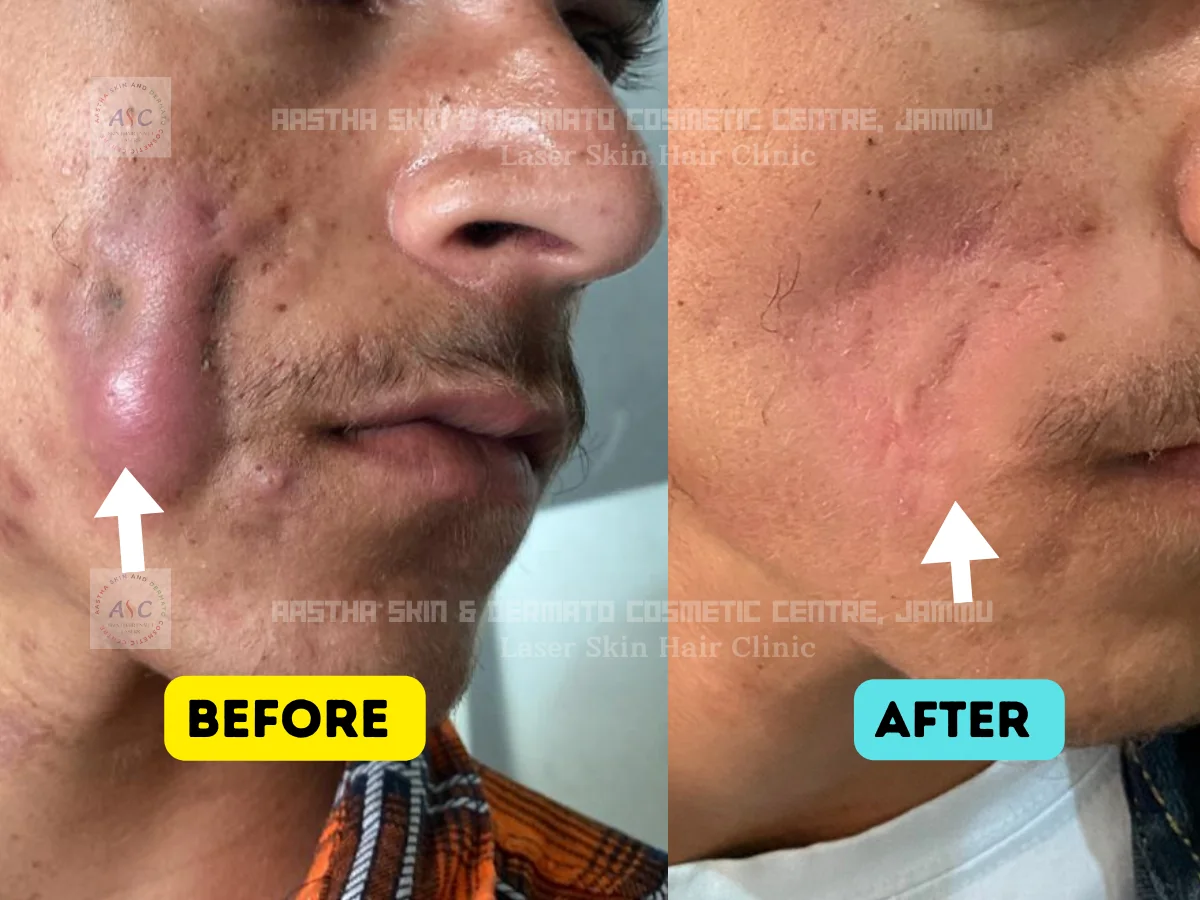
Acne with marks or scars
Dark marks and red marks are colour changes after inflammation. They are different from permanent textural scars.
Prescription topical treatment
Topical medicines may be used to:
- Unblock pores
- Reduce inflammation
- Control acne-causing organisms
- Prevent new lesions
- Improve post-acne pigmentation
Current acne guidelines support several topical treatment classes and often favour combinations that work through different mechanisms.
Oral treatment
Oral medicines may be considered for moderate, severe, widespread or treatment-resistant acne.
Options depend on the patient’s age, medical history, pregnancy potential, acne severity and previous response. Systemic antibiotics should be used carefully and generally alongside appropriate topical treatment rather than as indefinite stand-alone therapy.
Oral isotretinoin
Oral isotretinoin may be considered for selected patients with severe acne, acne at high risk of permanent scarring or acne that has not responded adequately to appropriate treatment.
It requires careful medical supervision, counselling, monitoring and strict pregnancy-prevention measures where relevant. NICE updated its isotretinoin recommendations in April 2026 to reflect current risk-minimisation requirements.
Chemical peels
Selected medical chemical peels may support treatment for comedonal acne, oily skin and post-acne pigmentation.
The peel type and strength must be chosen according to skin type, active inflammation, sensitivity and current medicines.
Comedone management
Selected blackheads and whiteheads may be treated through medically supervised extraction as part of a broader acne plan.
Treatment for painful individual lesions
A dermatologist may consider an in-clinic injection for selected large, painful inflammatory lesions when clinically appropriate. Current acne guidance recognises intralesional corticosteroid treatment as an adjunctive option for appropriate individual lesions.
How long does acne treatment take?
Acne generally improves gradually rather than overnight. The skin needs time to respond, and early dryness or irritation can occur with some medicines.
A treatment review is usually needed to assess:
- Reduction in new breakouts
- Tolerance of medicines
- Adherence to the routine
- New marks or scars
- Need for dose or product changes
- Whether maintenance treatment is required
Patients should not stop treatment immediately after the skin begins to improve. Maintenance therapy may help reduce relapse, and NICE acne guidance includes specific recommendations for recurrence and maintenance.
Can acne be cured permanently?
Acne can often be controlled effectively, but recurrence is possible because hormonal activity, genetics and skin behaviour may continue.
The aim of treatment is to:
- Control active acne
- Reduce the frequency and severity of breakouts
- Prevent scars
- Reduce marks
- Maintain improvement
Claims of an instant or guaranteed permanent cure should be avoided.
Acne marks
Acne marks are changes in skin colour after a breakout. They may appear:
- Brown or dark
- Red or pink
- Purple-grey in deeper skin tones
These marks may gradually fade, although treatment and sun protection can help.
Acne scars
Acne scars involve a permanent change in skin texture.
They may be:
- Ice-pick scars
- Boxcar scars
- Rolling scars
- Raised scars
- Keloids
Different scar types require different treatments. A scar plan should be based on examination rather than one standard procedure for every patient.
Why should active acne be controlled before scar treatment?
Continuing breakouts can produce new scars even while older scars are being treated. Dermatologists therefore commonly begin by controlling active acne and preventing new lesions before starting intensive scar procedures.
Once acne is controlled, a separate scar assessment may consider:
- MNRF
- Microneedling
- Subcision
- TCA CROSS for selected scars
- Fractional CO₂ laser
- PRP-supported procedures
- Combination scar revision
Acne-scar procedures are available at both Aastha Skin Centre branches.
Additional care and practical advice
Gentle cleansing
Cleanse without aggressive rubbing or frequent scrubbing.
Non-comedogenic moisturiser
Acne treatments can cause dryness. A suitable moisturiser may improve comfort and adherence.
Sunscreen
Sun protection helps reduce worsening of post-acne marks and supports the skin during treatment.
Prescribed acne treatment
Apply medicines in the amount and frequency advised by the dermatologist.
Suitable cosmetics
Choose products labelled non-comedogenic or less likely to block pores.
More products do not necessarily mean better acne control. Combining several strong ingredients without guidance can damage the skin barrier.
Does diet cause acne?
Diet is not the only cause of acne. Some people may notice that particular dietary patterns appear to influence their breakouts, but restrictive diets should not replace appropriate medical treatment.
Patients can maintain a balanced diet and observe whether a consistent personal trigger exists. NICE reviewed dietary evidence while developing its acne guideline, but acne care remains centred on evidence-based skin treatment tailored to the individual.
Can stress worsen acne?
Stress may worsen breakouts in some people through hormonal and behavioural pathways. Stress can also affect sleep, skincare consistency and picking behaviour.
Managing stress may support overall wellbeing, but stress reduction alone may not control moderate or severe acne.
Acne treatment during pregnancy
Acne treatment during pregnancy or while trying to conceive requires special care because several common acne medicines are not suitable.
Patients should tell the dermatologist when they:
- Are pregnant
- Are trying to conceive
- Are breastfeeding
- Have recently stopped contraception
- Are taking hormonal treatment
Do not continue or start prescription acne medicine during pregnancy without guidance from a qualified medical professional.
Acne treatment for teenagers
Teenage acne should not automatically be dismissed as something that must simply be endured.
Early assessment may help:
- Reduce painful inflammation
- Prevent avoidable scars
- Improve treatment habits
- Reduce inappropriate home remedies
- Support confidence and wellbeing
Parents and teenagers should understand that improvement usually requires consistent treatment over time.
Acne treatment for adults
Adult acne may differ from teenage acne in pattern, triggers and treatment considerations.
An adult-acne assessment may review:
- Menstrual pattern
- Hormonal symptoms
- Pregnancy plans
- Current cosmetics
- Hair and skin products
- Medicines
- Stress and sleep
- Previous acne treatment
- Scarring tendency
Treatment is customised rather than based solely on age.
How care is planned
- Assessment comes before treatment selection.
- Options, limitations, aftercare and expected timelines are explained.
- The plan is adapted to diagnosis, skin type and medical history.
Choose a clinic in Jammu
Karan Nagar
Lane 2, Karan Nagar, near Amphalla Chowk, Jammu – 180005Doctor consultation:
Mon–Sat 11:00 AM–4:00 PM
Sun 11:00 AM–3:00 PM
Paloura Chowk
Top Paloura, opposite Government Senior Secondary School, Jammu – 181121Doctor consultation:
Mon–Sat 6:00 PM–8:00 PM
Sun 10:30 AM–12:00 PM
Frequently asked questions
Who treats acne at Aastha Skin Centre in Jammu?
Dr. Cheena Langer, MBBS, MD Dermatology, Consultant Dermatologist, provides acne assessment and treatment at the Karan Nagar and Paloura branches.
What is the most effective treatment for acne?
There is no single treatment that is best for everyone. Treatment depends on acne type, severity, body area, medical history, pregnancy considerations and risk of scarring.
How long does acne treatment take to work?
Acne treatment generally requires consistent use over several weeks, followed by review and possible maintenance. The exact timeline depends on acne severity, treatment type and individual response.
Can acne scars be prevented?
Early control of active acne, avoiding picking and continuing maintenance treatment can reduce the risk of new scars. Deep nodules and cysts have a higher scarring risk.
Can acne be treated during pregnancy?
Yes, but treatment options are restricted because some common acne medicines are unsafe during pregnancy. A dermatologist should select pregnancy-appropriate care.
Are chemical peels useful for acne?
Selected chemical peels may support treatment for comedonal acne, oily skin and post-acne pigmentation. Suitability depends on skin type, active inflammation and current medicines.
Is acne treatment available at both Aastha Skin Centre branches?
Yes. Acne treatment and acne-scar procedures are confirmed as available at both Karan Nagar and Paloura.
Get a clear plan for acne
Request a consultation with Dr. Cheena Langer at Karan Nagar or Paloura Chowk.
Medical disclaimer: Results may vary from person to person. This content is for informational purposes only and does not substitute a consultation with a qualified medical professional. Dr. Cheena Langer, MD is a registered medical practitioner.