
What is a Q-switched laser?
A Q-switched laser produces very short, high-energy pulses, typically within the nanosecond range.
These short pulses can selectively affect pigmented structures while aiming to limit unnecessary heating of surrounding tissue. The disrupted pigment is then gradually processed by the body.
Q-switched lasers may be used for selected:
- Epidermal pigmentation
- Dermal pigmentation
- Freckles or solar lentigines
- Certain birthmark-like pigment conditions
- Tattoo pigments
- Resistant pigmentation concerns
The treatment wavelength, spot size, fluence and pulse number must be selected according to the condition and skin tone.
What is Q-switched Nd:YAG?
Nd:YAG stands for neodymium-doped yttrium aluminium garnet.
A Q-switched Nd:YAG system is a pigment-targeting laser platform. Depending on its verified configuration, such a system may provide different wavelengths for pigment located at different skin depths.
Device details and regulatory claims depend on the exact system used and are discussed during consultation.
What is laser toning?
Laser toning generally refers to repeated low-fluence Q-switched laser passes delivered over a larger pigmented area.
Rather than aggressively treating one isolated spot, the treatment uses lower energy across a wider area with the aim of gradually reducing visible pigment.
Laser toning has been studied most frequently for melasma and uneven facial pigmentation. Research shows possible improvement in selected patients, but protocols are not standardised and recurrence, rebound pigmentation and mottled light patches can occur.
How does Dr. Cheena Langer assess pigmentation?
A consultation may include:
- Identifying the type of pigmentation
- Reviewing when it began
- Checking whether it is changing
- Examining pigment depth and distribution
- Looking for melasma, freckles or lentigines
- Checking for active acne or dermatitis
- Assessing natural skin tone and tanning
- Reviewing previous peels or lasers
- Asking about medicines and hormones
- Reviewing pregnancy or breastfeeding
- Examining suspicious or unusual lesions
- Discussing realistic benefits and risks
A Wood’s lamp, dermoscopy or biopsy may occasionally be considered when the diagnosis is uncertain.
Types, options and detailed guidance
Is laser toning the same as treating individual brown spots?
No.
- Uses relatively low fluence
- Often treats a wider facial area
- Usually requires several sessions
- Is commonly discussed for diffuse pigmentation
- Produces gradual rather than immediate change
- Targets individual defined lesions
- May use different parameters
- Can cause temporary crusting or darkening
- May need fewer sessions for suitable isolated spots
- Requires the lesion to be diagnosed first
One method should not be substituted for the other without examining the type and depth of pigmentation.
Which pigmentation concerns may be considered?
After dermatological assessment, Q-switched treatment may be considered for selected:
- Freckles
- Solar lentigines or sun spots
- Superficial pigmentation
- Certain dermal pigmentation conditions
- Post-inflammatory pigmentation in carefully selected cases
- Resistant melasma as part of a wider treatment plan
- Uneven facial pigmentation
- Tattoo pigment
Q-switched lasers are established pigment-targeting platforms, but treatment choice must be based on the condition rather than the colour alone.
Tattoo removal should be discussed through the dedicated tattoo-removal treatment pathway.
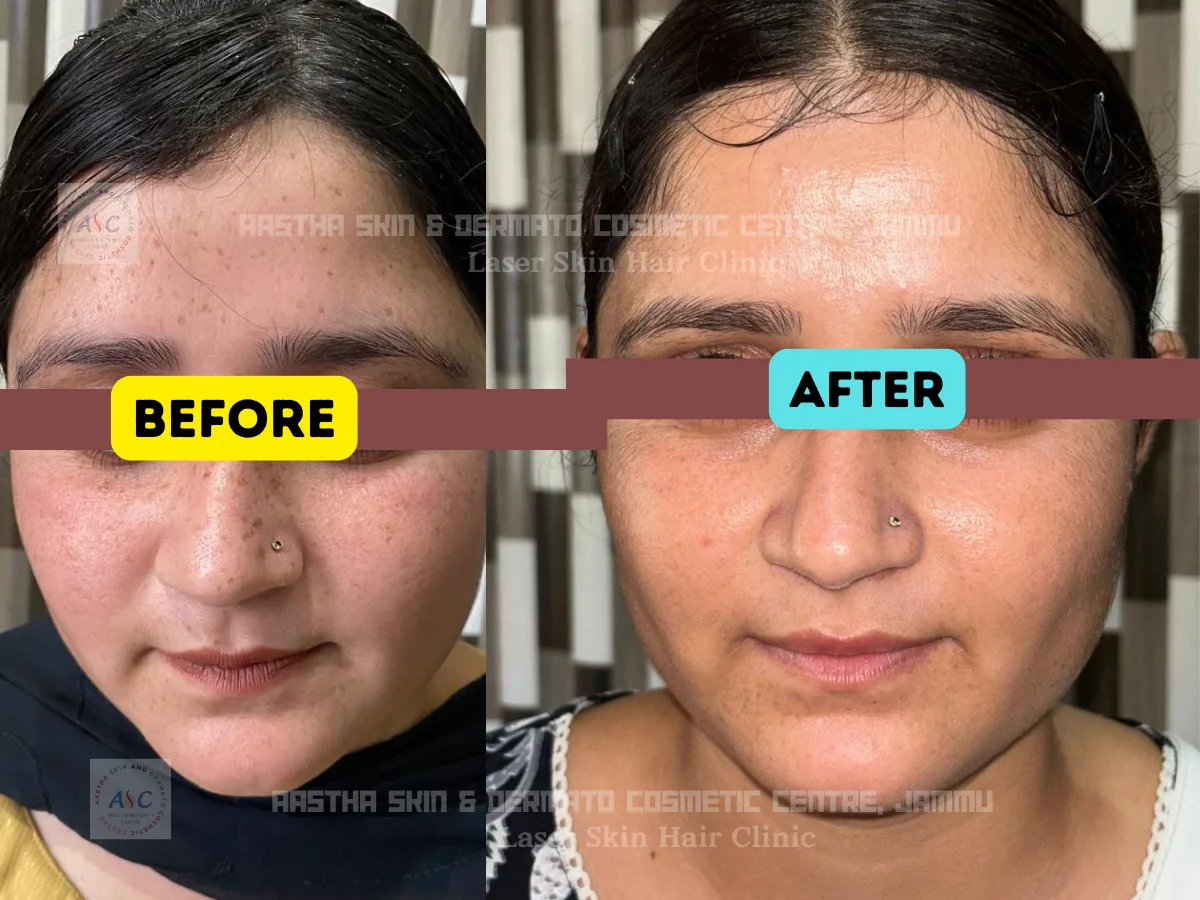
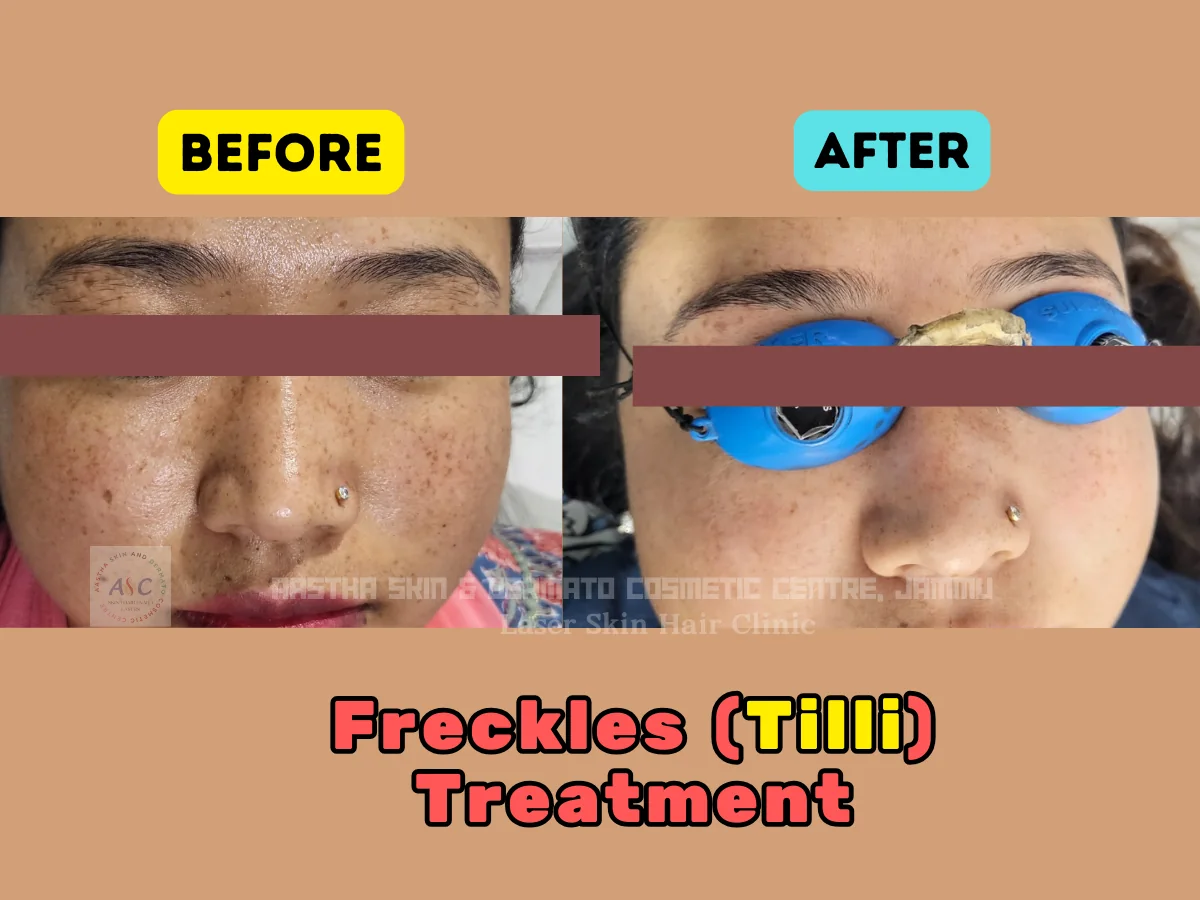
Can Q-switched laser treat freckles?
Selected freckles may respond to pigment-targeting laser treatment.
However, freckles are strongly influenced by:
- Genetics
- Sun exposure
- Natural skin tone
- Seasonal ultraviolet exposure
Even when existing freckles fade, new ones can appear with continued sun exposure. Daily sun protection therefore remains important.
A dermatologist should examine the spots first because freckles, lentigines, moles and other pigmented lesions can look similar without close assessment.
Can it treat sun spots or age spots?
Selected solar lentigines may respond to laser treatment.
The treated spot may temporarily:
- Darken
- Develop fine crusting
- Look more visible before fading
- Become tender
- Develop surrounding redness
The AAD advises that a presumed age spot should be examined before cosmetic treatment because some skin cancers can resemble harmless pigmentation.
Laser treatment may also cause temporary or persistent darkening, lightening or scarring, particularly in patients prone to pigmentation changes.
Can Q-switched laser treat post-acne dark marks?
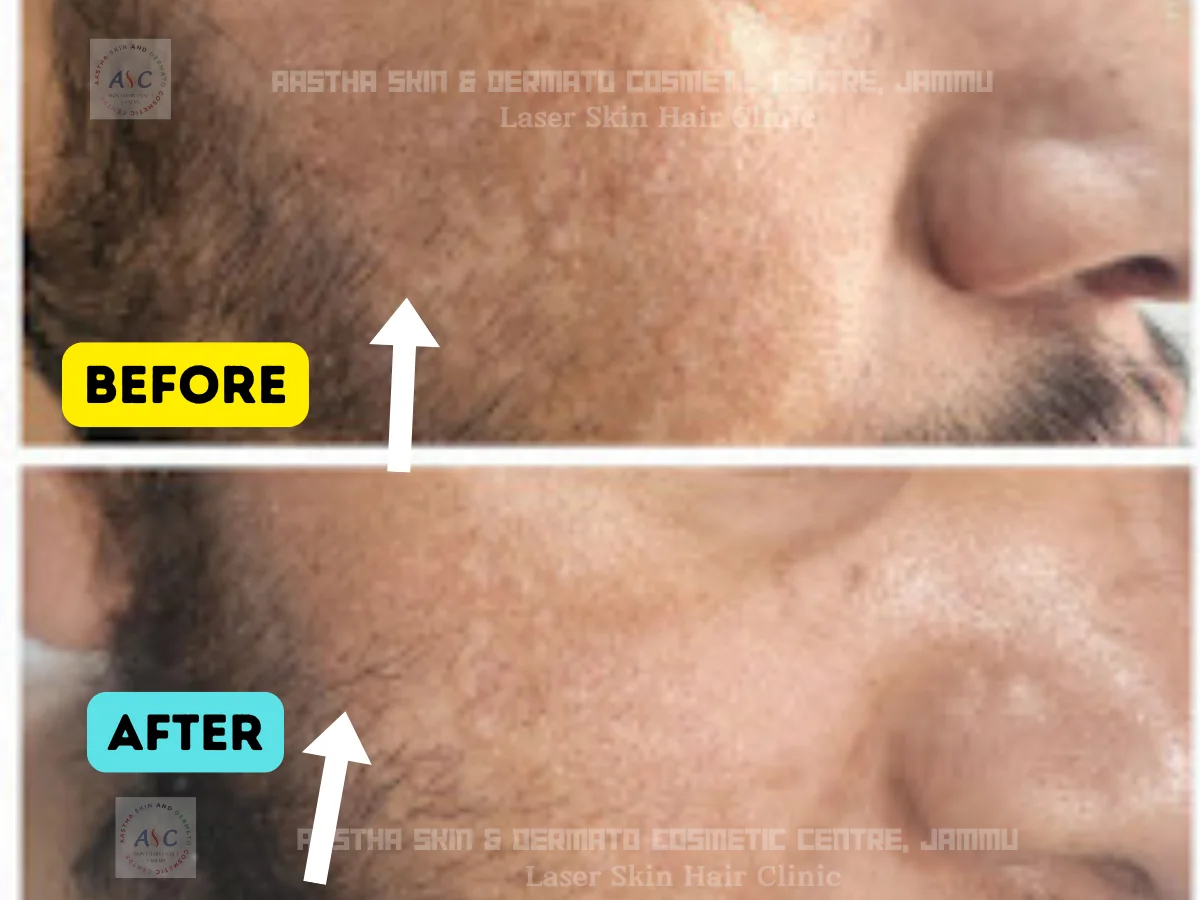
Selected post-inflammatory dark marks may be considered for treatment, but the cause of ongoing inflammation should be controlled first.
Post-acne pigmentation can be influenced by:
- Active acne
- Picking or squeezing
- Irritating skincare
- Sun exposure
- Previous burns or procedures
- Natural skin tone
Treatment usually begins with acne control, sunscreen and suitable topical medication. Laser may be considered when marks remain despite an appropriate medical plan.
In darker skin tones, additional inflammation from a procedure can itself cause new pigmentation.
Can laser toning treat melasma?
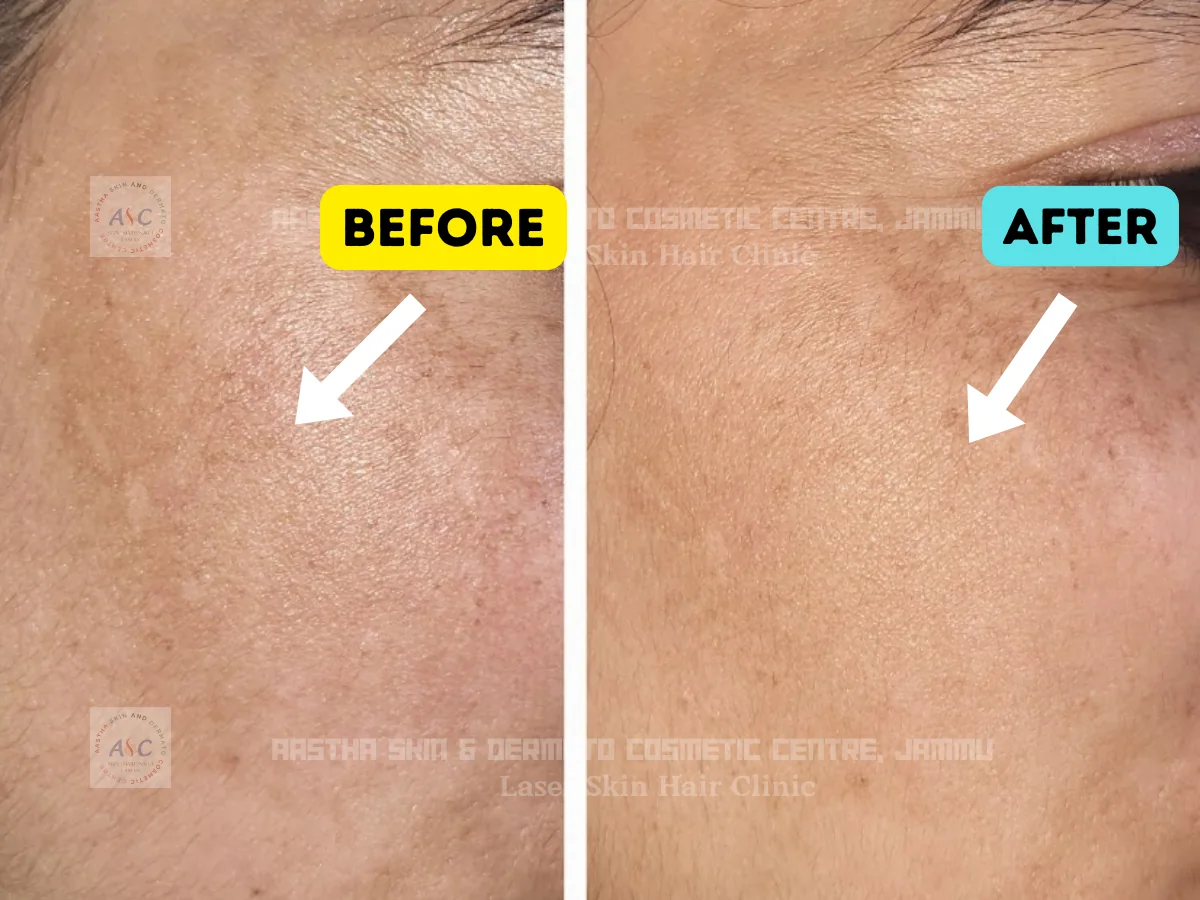
Laser toning may improve melasma in selected patients, particularly when topical treatment and sun protection alone have not provided adequate control.
However, melasma is chronic and frequently returns. Laser should not be presented as a permanent cure.
Clinical evidence shows:
- Some studies report short-term improvement
- Combined treatment can perform better than laser alone
- Results vary between studies
- Recurrence is common
- Rebound pigmentation can occur
- Mottled hypopigmentation can occur after repeated treatment
Is laser the first treatment for melasma?
Usually not.
Melasma treatment generally begins with:
- Broad-spectrum sunscreen
- Visible-light protection where appropriate
- Trigger management
- Suitable prescription topical treatment
- Gentle skincare
- Long-term maintenance
The AAD describes laser or light treatment as a possible addition for selected patients who are already using medication and protecting their skin from the sun.
Indian pigment experts similarly advise that laser should not be the first-line treatment for melasma and should generally be reserved for selected resistant cases after counselling and possible test treatment.
Why does melasma return after laser treatment?
Laser treatment can reduce visible pigment without permanently removing the factors that make pigment-producing cells more active.
Melasma may recur because of:
- Sunlight
- Visible light
- Heat exposure
- Hormonal influences
- Pregnancy-related changes
- Oral contraceptive use
- Genetic tendency
- Inadequate maintenance
- Skin irritation
A split-face study in darker skin found modest improvement with Q-switched laser, but pigmentation reappeared after treatment stopped.
Long-term control therefore depends heavily on sun protection, topical maintenance and trigger management.
Can laser toning make melasma worse?
Yes, worsening is possible.
Potential unwanted responses include:
- Rebound hyperpigmentation
- Increased patchiness
- Post-inflammatory darkening
- Mottled hypopigmentation
- Uneven colour
- Temporary redness or sensitivity
Asian studies have reported recurrence, rebound hyperpigmentation and mottled loss of pigment after repeated low-fluence Q-switched treatment.
This is why melasma laser treatment requires conservative planning, adequate intervals and a clear maintenance programme.
Is Q-switched laser suitable for Indian skin?
It can be used in selected Indian patients, but medium-to-deep skin requires careful treatment planning.
Normal epidermal melanin can absorb laser energy, increasing the possibility of:
- Burns
- Post-inflammatory hyperpigmentation
- Hypopigmentation
- Uneven skin colour
- Prolonged irritation
- Scarring
The AAD advises that darker skin is more prone to burns and dark marks following laser treatment and recommends treatment by a dermatologist experienced with similar skin tones.
The safest settings depend on the diagnosis, treatment wavelength, skin tone and recent sun exposure.
Who may be suitable for treatment?
Treatment may be considered for a patient who:
- Has a clearly diagnosed pigment concern
- Understands that results vary
- Has realistic expectations
- Is willing to use sunscreen consistently
- Has no active infection in the area
- Is not significantly tanned
- Can follow aftercare advice
- Accepts that several sessions may be required
- Understands the risk of darkening or lightening
A patient requesting general “skin whitening” without a defined pigment condition should not automatically be treated with laser toning.
Why should every dark spot not be treated with a laser?
A dark spot may represent:
- Melasma
- Post-inflammatory pigmentation
- Freckle
- Solar lentigo
- Mole
- Seborrhoeic keratosis
- Medication-related pigmentation
- Dermatitis
- Lichen planus pigmentosus
- Rarely, a skin cancer
Destroying a suspicious lesion cosmetically can delay diagnosis and may remove tissue that should have been examined.
A changing, irregular, bleeding or non-healing pigmented lesion should receive medical assessment before any cosmetic laser procedure.
What is a test spot?
A test spot means treating a small representative area before treating a larger region.
It may be considered when:
- The patient has deeper skin tone
- The diagnosis is difficult
- Pigmentation risk is high
- The patient has reacted to lasers before
- Cosmetic pigment is involved
- The treatment area is large
- Settings need to be assessed conservatively
The test area is reviewed after an appropriate interval to check for:
- Excessive darkening
- Light patches
- Blistering
- Unexpected inflammation
- Poor pigment response
A good test response does not eliminate every later risk, but it can provide useful safety information.
What happens during treatment?
A typical appointment may involve:
- Confirming the diagnosis and treatment area
- Taking standardised photographs
- Cleansing the skin
- Covering unsuitable moles or lesions
- Providing protective eyewear
- Selecting the laser settings
- Delivering controlled laser pulses
- Monitoring the immediate skin response
- Cooling or soothing the area
- Applying sunscreen or dressing where required
- Providing written aftercare advice
Eye protection is essential because reflected or direct laser energy can injure the eyes.
Is Q-switched laser treatment painful?
Sensation depends on the energy, treatment area and pigment target.
Patients may feel:
- Warmth
- Stinging
- Pinprick sensations
- A snapping feeling
- Temporary burning
- Tenderness afterwards
Spot treatment of dense pigment may feel stronger than low-fluence laser toning.
Cooling or topical anaesthetic may be considered where appropriate, but the procedure should not be described as completely painless.
Is there downtime?
After laser toning
Patients may experience:
- Mild redness
- Warmth
- Temporary sensitivity
- Mild dryness
- Short-lived swelling
After spot treatment
Patients may experience:
- Darkening of the treated spot
- Fine crusting
- Swelling
- Redness
- Temporary tenderness
- Peeling
Laser procedures can cause crusting, temporary colour change and other healing reactions.
When will results become visible?
Results develop gradually and depend on the condition.
An isolated superficial pigment spot may change after one treatment, while diffuse pigmentation or melasma may require a course of sessions.
Improvement may appear as:
- Fading of selected spots
- Reduced contrast between pigment and surrounding skin
- More even-looking colour
- Reduced patchiness
- Gradual rather than immediate change
Temporary swelling or whitening immediately after treatment should not be mistaken for the final result.
How many sessions are required?
The number of sessions depends on:
- Diagnosis
- Pigment depth
- Natural skin tone
- Treatment wavelength
- Energy and spot size
- Treatment area
- Previous procedures
- Response after each session
- Risk of pigmentation
- Maintenance requirements
Laser-toning studies use varied protocols, and there is no universally accepted treatment schedule for melasma.
A fixed package should therefore not be recommended before assessment.
How far apart should sessions be?
The interval is selected according to:
- Treatment intensity
- Skin recovery
- Diagnosis
- Darkening or lightening after treatment
- Recent sun exposure
- Response to earlier sessions
- Combination skincare
- Device protocol
Repeating laser toning too frequently or continuing despite early white patches can increase the risk of cumulative pigment injury.
The next session should be postponed when the skin has not recovered normally.
Additional care and practical advice
What is mottled hypopigmentation?
Mottled hypopigmentation means the development of scattered pale or white spots within the treated area.
It has been reported after repeated low-fluence Q-switched laser toning, particularly when cumulative energy becomes excessive.
It may be:
- Temporary
- Prolonged
- Difficult to treat
- More visible on darker skin
Laser treatment should be stopped and reviewed if unexplained light spots appear.
How care is planned
- Assessment comes before treatment selection.
- Options, limitations, aftercare and expected timelines are explained.
- The plan is adapted to diagnosis, skin type and medical history.
Choose a clinic in Jammu
Karan Nagar
Lane 2, Karan Nagar, near Amphalla Chowk, Jammu – 180005Doctor consultation:
Mon–Sat 11:00 AM–4:00 PM
Sun 11:00 AM–3:00 PM
Paloura Chowk
Top Paloura, opposite Government Senior Secondary School, Jammu – 181121Doctor consultation:
Mon–Sat 6:00 PM–8:00 PM
Sun 10:30 AM–12:00 PM
Frequently asked questions
What other risks are possible?
Possible side effects include:
- Pain
- Redness
- Swelling
- Bruising
- Crusting
- Blistering
- Burns
- Infection
- Post-inflammatory hyperpigmentation
- Hypopigmentation
- Mottled leukoderma
- Rebound pigmentation
- Scarring
- Incomplete or uneven clearance
The FDA lists incomplete treatment, pain, infection, bleeding, scarring and skin-colour changes among recognised risks of medical lasers.
Who may need to postpone treatment?
Treatment may be postponed or require further review when there is:
- Recent tanning
- Sunburn
- Active bacterial, viral or fungal infection
- Active cold sores
- Open wounds
- Significant dermatitis
- Severe active acne
- A suspicious pigmented lesion
- Poorly controlled diabetes
- Reduced immunity
- Pregnancy or breastfeeding
- Photosensitivity
- A history of abnormal scarring
- Recent aggressive peel or laser treatment
The exact contraindications must also follow the instructions for the particular laser system.
Which medicines should patients disclose?
Tell Dr. Cheena Langer about:
- Isotretinoin
- Prescription retinoids
- Blood-thinning medicines
- Photosensitising antibiotics
- Hormonal medicines
- Oral contraceptives
- Hydroquinone
- Tranexamic acid
- Steroid creams
- Medicines affecting immunity
- Herbal or unregulated pigmentation products
Some medicines can increase skin sensitivity or change the pigmentation pattern. Patients should not stop prescribed treatment independently.
Can Q-switched laser be combined with other treatments?
Yes, but combination treatment should be planned carefully.
Depending on the diagnosis, treatment may include:
- Prescription pigmentation creams
- Sunscreen
- Visible-light protection
- Chemical peels
- Microneedling
- Hydrating or barrier-support skincare
- Hormonal or trigger assessment
- Q-switched laser
- Long-term maintenance
Research indicates that laser combined with topical treatment may produce better short-term melasma improvement than laser alone, although recurrence and adverse effects remain possible.
Several irritating procedures should not automatically be performed together.
Is Q-switched laser the same as IPL?
No.
Q-switched laser
Uses a specific laser wavelength
Produces very short pulses
Commonly targets selected pigment or tattoo ink
Can be used for spot treatment or low-fluence toning
IPL
Uses a broad range of filtered light
May target both superficial pigment and blood vessels
Covers a wider area with each pulse
Has different indications and risks
The correct choice depends on whether the main concern is pigment, vascular redness or a mixture of both.
Get a clear plan for q-switched laser & laser toning
Request a consultation with Dr. Cheena Langer at Karan Nagar or Paloura Chowk.
Medical disclaimer: Results may vary from person to person. This content is for informational purposes only and does not substitute a consultation with a qualified medical professional. Dr. Cheena Langer, MD is a registered medical practitioner.