What is a hair transplant?
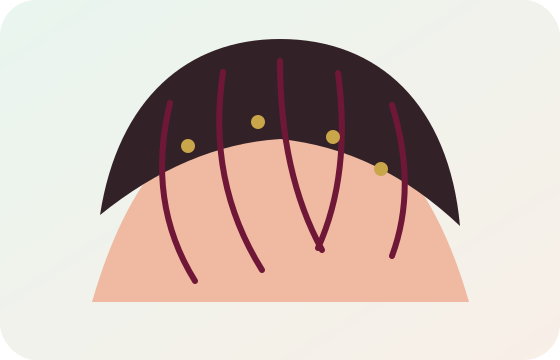
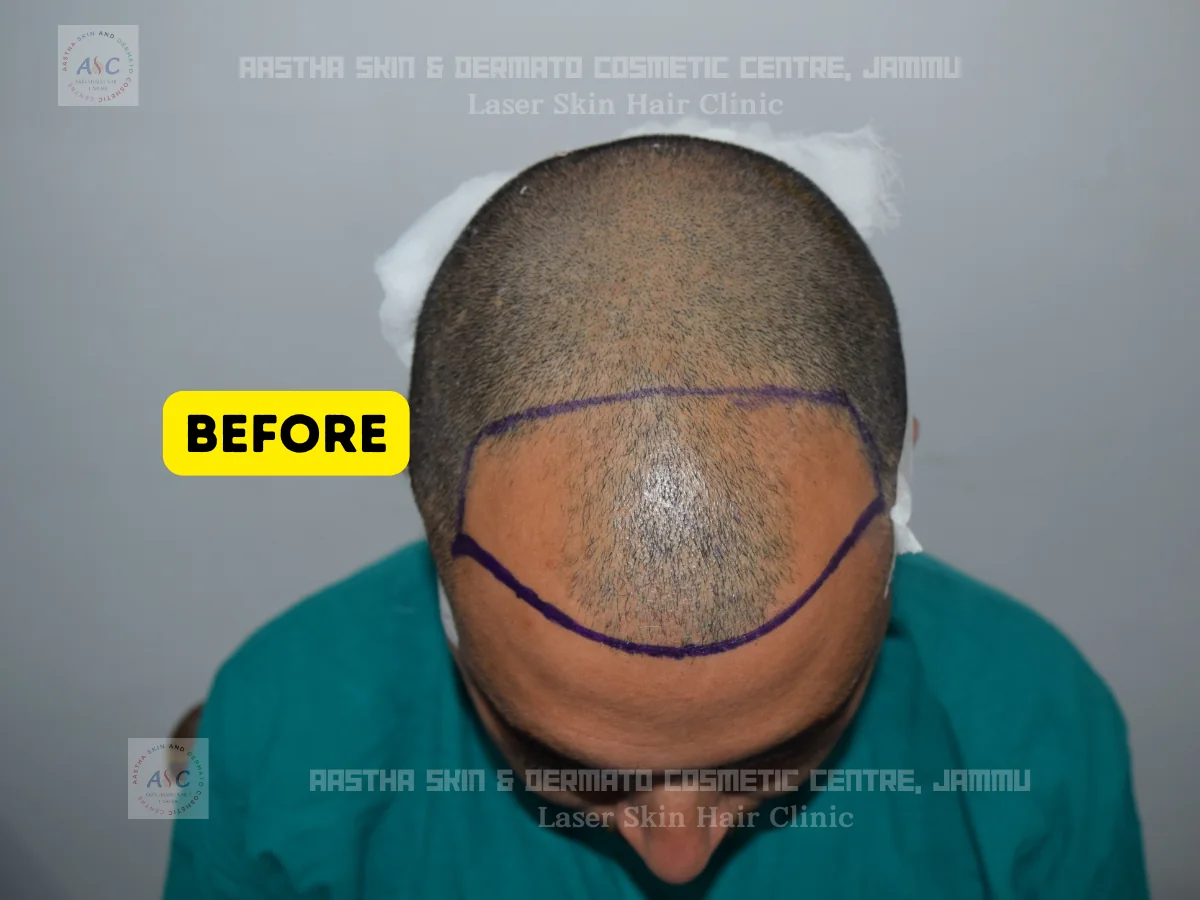
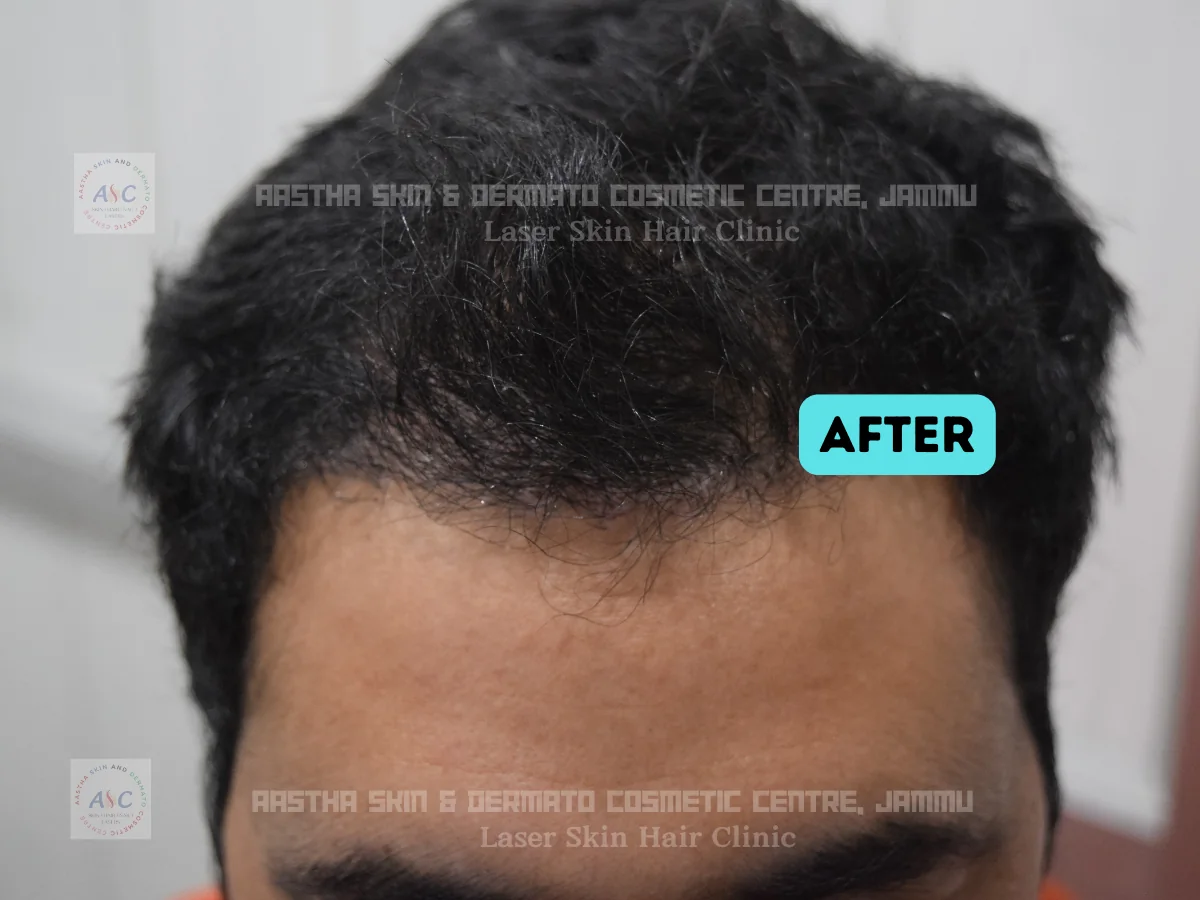
A hair transplant is a surgical hair-restoration procedure in which naturally growing hair follicles are moved from one part of the scalp to another.
The procedure does not create unlimited new follicles. It redistributes a limited supply of existing donor hair to improve coverage in selected thinning or bald areas.
Modern procedures commonly use small follicular-unit grafts containing one or several hairs. These grafts are positioned to recreate appropriate direction, angle and density.
Which type of hair loss is commonly treated?
Hair transplantation is most commonly considered for androgenetic alopecia, also called:
- Male-pattern hair loss
- Female-pattern hair loss
- Hereditary patterned hair thinning
It may also be considered for selected stable cases involving:
- Receding frontal hairline
- Temporal recession
- Crown thinning
- Hairline correction
- Stable traction alopecia
- Selected surgical or traumatic scars
- Carefully selected inactive scarring alopecia
Not every form of hair loss is suitable for transplantation. Diagnosis should come before surgical planning.
Why is hair-loss diagnosis necessary first?
Hair can shed or thin because of many different conditions, including:
- Pattern hair loss
- Thyroid or nutritional problems
- Recent illness
- Stress-related shedding
- Alopecia areata
- Fungal scalp infection
- Traction alopecia
- Scarring alopecia
- Medication effects
- Post-pregnancy shedding
A transplant does not treat the underlying cause of active, temporary or inflammatory hair loss. A dermatologist may use scalp examination, dermoscopy, blood tests or scalp biopsy to identify the diagnosis before surgery is considered.
Who may be suitable for a hair transplant?
A potentially suitable candidate generally needs:
- A confirmed type of permanent hair loss
- Adequate healthy donor hair
- Reasonably stable hair-loss progression
- A healthy scalp
- Realistic density expectations
- Sufficient healing capacity
- Willingness to follow aftercare
- Understanding that native hair may continue thinning
The AAD identifies adequate donor hair and the ability to grow hair in the recipient area as two essential requirements.
Who may need to postpone the procedure?
A hair transplant may be postponed when there is:
- Rapidly progressing hair loss
- Severe active dandruff or dermatitis
- Scalp infection
- Active alopecia areata
- Active scarring alopecia
- Inflamed or painful scalp disease
- Poorly controlled diabetes
- Significant bleeding risk
- Unrealistic expectations
- Inadequate donor density
- A very young patient with an unpredictable future pattern
Treating an unstable scalp condition first may reduce the risk of graft loss, poor healing or an unnatural result as hair loss progresses.
What is the donor area?
The donor area is the part of the scalp from which follicles are harvested.
It usually includes selected areas at the back and sides of the head because these follicles are often more resistant to the hormonal influence involved in pattern hair loss. The size and quality of the donor supply limit how much coverage can realistically be created.
Assessment may include:
- Donor density
- Hair-shaft thickness
- Number of hairs per follicular unit
- Hair curl and colour
- Scalp flexibility
- Existing scars
- Miniaturisation within the donor zone
- Previous transplant harvesting
The donor area is finite and must be preserved for present and possible future needs.
What is follicular unit excision or FUE?
Follicular unit excision, commonly called FUE, removes follicular units individually using small circular punches.
The grafts are then prepared and placed into recipient sites in the thinning area. FUE leaves numerous small punctate scars rather than one long linear scar.
Possible advantages include:
- No long strip scar
- Greater flexibility with shorter hairstyles
- Individual graft harvesting
- Usually less tension at the donor wound
Limitations can include:
- Need to trim or shave donor hair in many cases
- Longer harvesting time
- Visible dot scars with very short shaving
- Risk of overharvesting
- Risk of graft transection
- Limited donor supply
FUE should not be advertised as completely scarless.
What is follicular unit transplantation or FUT?
Follicular unit transplantation, or FUT, involves removing a narrow strip of hair-bearing scalp from the donor area.
The strip is divided into individual follicular-unit grafts, and the donor wound is closed with stitches. FUT generally leaves a linear scar that may be concealed by surrounding hair.
FUT may be considered when:
- A relatively large number of grafts is required
- Donor preservation is a priority
- The patient normally keeps longer hair
- Scalp flexibility is suitable
- A linear scar is acceptable
The exact technique available through Aastha Skin Centre must be confirmed before it is advertised as a clinic-specific service.
Is FUE better than FUT?
Neither technique is automatically superior for every patient.
Research reviews find that both FUE and FUT can produce high-quality follicular-unit grafts. Their main differences involve donor harvesting, scar pattern, recovery, graft numbers and suitability for future procedures.
FUE may be preferred when
- The patient wants to avoid a long linear scar
- Short hairstyles are important
- Scalp tightness limits strip removal
- Only a selected graft number is needed
FUT may be considered when
- A larger graft harvest is planned
- Donor density must be managed conservatively
- The patient can conceal a linear scar
- Repeat surgical planning favours strip harvesting
The choice should follow scalp assessment and long-term donor planning.
What is DHI hair transplant?
DHI, or direct hair implantation, is commonly used as a marketing term for graft placement with an implanter device.
In many cases, the follicles are still harvested using an FUE-type method. An implanter pen changes how grafts are placed; it does not automatically create a completely separate biological form of hair transplantation. Implanter tools are among several accepted graft-placement methods described in surgical literature.
DHI should not automatically be described as:
- Scar-free
- Painless
- More successful than every other method
- A guarantee of higher density
- Suitable for every patient
Aastha Skin Centre should only advertise DHI when the exact technique, equipment and operating-team training have been verified.
How is a natural-looking hairline planned?
Hairline design affects the long-term appearance of the transplant.
Planning considers:
- Age
- Facial proportions
- Existing frontal hair
- Future hair-loss pattern
- Donor supply
- Hair calibre
- Direction and angle of growth
- Temporal recession
- Desired hairstyle
A conservative hairline may remain more natural as the patient ages and help preserve donor grafts for future thinning. Fine single-hair grafts are commonly used near the front, with larger follicular units placed farther behind for density.
An unusually low or perfectly straight hairline can appear artificial and consume excessive donor hair.
How is the number of grafts estimated?
The estimated graft number depends on:
- Size of the thinning area
- Existing hair density
- Degree of baldness
- Donor density
- Hair-shaft thickness
- Hair-to-skin colour contrast
- Curl or wave
- Previous transplant surgery
- Desired coverage
- Need to reserve donor hair
A graft is not always the same as a single hair. One follicular-unit graft may contain one, two, three or more hair shafts.
An exact graft number cannot be promised from a photograph alone. Physical scalp examination is usually needed.
What happens during a hair transplant?
A typical procedure may involve:
- Confirming the surgical plan
- Photographing and marking the scalp
- Designing the hairline
- Trimming or shaving selected hair
- Cleaning the scalp
- Administering local anaesthetic
- Harvesting donor follicular units
- Preparing and storing the grafts
- Creating recipient sites
- Placing grafts at planned angles and directions
- Dressing or cleaning the donor area
- Providing postoperative instructions
Hair-transplant surgery frequently takes several hours, and a large session may continue over more than one day. Most patients remain awake under local anaesthesia.
Diagnosis before surgery
The cause and stability of hair loss are assessed before transplantation is recommended.
Donor-area planning
Donor density, miniaturisation, hair calibre and future requirements are considered before estimating graft availability.
Dermatologist-led evaluation
Assessment is provided under Dr. Cheena Langer, MBBS, MD Dermatology, Consultant Dermatologist.
Medical and surgical planning
Patients can be advised about medicines, PRP/GFC, transplantation and non-surgical alternatives according to diagnosis.
Realistic expectations
The goal is improved coverage, not unlimited grafts, guaranteed density or completely scar-free surgery.
Hair-transplant procedure cost may depend on:
- Diagnosis
- Estimated graft requirement
- Donor-harvesting technique
- Size of the recipient area
- Hairline reconstruction
- One-day or staged procedure
- Anaesthesia
- Procedure team
- Consumables
- Postoperative medicines
- Follow-up care
- Any combination treatment
Exact pricing is discussed after scalp and donor-area examination. A small frontal correction requires a different plan from extensive frontal and crown restoration.
Pricing should not be advertised solely as a low “per graft” figure without explaining what is included.
How care is planned
- Assessment comes before treatment selection.
- Options, limitations, aftercare and expected timelines are explained.
- The plan is adapted to diagnosis, skin type and medical history.
Choose a clinic in Jammu
Karan Nagar
Lane 2, Karan Nagar, near Amphalla Chowk, Jammu – 180005Doctor consultation:
Mon–Sat 11:00 AM–4:00 PM
Sun 11:00 AM–3:00 PM
Paloura Chowk
Top Paloura, opposite Government Senior Secondary School, Jammu – 181121Doctor consultation:
Mon–Sat 6:00 PM–8:00 PM
Sun 10:30 AM–12:00 PM
Frequently asked questions
Is a hair transplant painful?
Local-anaesthetic injections may briefly sting or burn.
Once the scalp is numb, the patient may feel:
- Pressure
- Pulling
- Movement
- Vibration
- Mild discomfort from remaining in one position
Temporary soreness, tightness or sensitivity may develop after the anaesthetic wears off. The procedure should not be described as completely painless.
Is a hair transplant permanent?
Transplanted donor hair is intended to provide long-lasting growth, but surrounding native hair can continue thinning. Medical treatment and long-term planning may therefore remain necessary.
Why does transplanted hair fall out after surgery?
Many transplanted hair shafts shed during the first few weeks. This is usually an expected part of the growth cycle and does not necessarily mean the follicles have failed.
The AAD notes that transplanted hair commonly sheds between approximately two and eight weeks after surgery. The area may temporarily appear thinner before new growth becomes visible.
Patients should not judge the final result during this early shedding stage.
When does new hair growth begin?
The timeline varies, but patients may generally expect:
- First two weeks: healing, redness and crusting
- Two to eight weeks: shedding of transplanted shafts
- Around three to four months: early new growth may begin
- Six to nine months: more visible improvement
- Around 12 months or later: fuller maturation in many patients
The AAD reports that many patients see noticeable results between six and nine months, while some require around 12 months. NHS guidance notes that full maturation can take longer in some cases.
Crown growth may mature more slowly than frontal hairline growth.
How long is recovery?
Recovery depends on the harvesting method, graft number and individual healing.
Common early effects include:
- Swelling
- Tightness
- Tenderness
- Redness
- Small crusts
- Temporary numbness
- Donor-area discomfort
- Mild itching
Patients must be especially careful during the first two weeks because the newly placed grafts are still healing. Time away from work may range from several days to around two weeks depending on the procedure and how visible the recovery is.
What is shock loss?
Shock loss means temporary shedding of transplanted or nearby existing hair after surgery.
It can occur because follicles enter a resting phase following surgical stress. In many cases, the affected hair regrows, but permanent loss may occur when nearby native follicles were already severely miniaturised.
Temporary effluvium or shock loss is a recognised hair-transplant complication and should be discussed before surgery.
What risks can occur?
Possible risks and complications include:
- Pain
- Swelling
- Bleeding
- Infection
- Folliculitis
- Crusting
- Prolonged redness
- Temporary numbness
- Shock loss
- Poor graft growth
- Visible scarring
- Donor overharvesting
- Uneven density
- Unnatural direction
- An unnatural hairline
- Small cysts
- Pigmentation changes
- Rare tissue necrosis
Recent reviews identify donor depletion, hypopigmented dot scars, folliculitis, prolonged redness, shock loss and recipient-site injury among recognised FUE-related complications.
Get a clear plan for hair transplant
Request a consultation with Dr. Cheena Langer at Karan Nagar or Paloura Chowk.
Medical disclaimer: Results may vary from person to person. This content is for informational purposes only and does not substitute a consultation with a qualified medical professional. Dr. Cheena Langer, MD is a registered medical practitioner.