What is MNRF?
MNRF stands for microneedling radiofrequency. It is also called:
- RF microneedling
- Microneedle radiofrequency
- Fractional radiofrequency microneedling
- Fractional MNRF
The device uses an array of small needle-like electrodes. These enter the skin and deliver radiofrequency energy at selected depths, producing small areas of controlled heating within and beneath the skin.
The procedure is used most commonly for selected acne scars, texture concerns and certain skin-rejuvenation indications.
How does MNRF work?
During treatment:
- Fine needles enter the skin to a selected depth
- Radiofrequency energy is delivered through the electrodes
- Small controlled thermal zones are created
- A healing and remodelling response follows
- Scar texture may gradually improve over the following months
The depth and energy should be selected according to scar architecture and anatomical area. Excessive or inaccurately placed energy may injure normal tissue.
How does Dr. Cheena Langer assess acne scars?
An MNRF consultation may include:
- Confirming whether active acne is controlled
- Classifying scars as rolling, boxcar or ice-pick
- Checking for tethering beneath rolling scars
- Assessing scar depth and distribution
- Reviewing post-acne pigmentation
- Checking skin tone and pigmentation tendency
- Reviewing previous peels, lasers or scar procedures
- Asking about keloid or abnormal-scar history
- Reviewing medicines and medical conditions
- Creating a scar-specific treatment sequence
The plan may involve treating different scars with different methods rather than applying one device uniformly across the face.
What happens during an MNRF session?
A typical appointment may involve:
- Cleansing the treatment area
- Taking standardised photographs
- Applying topical anaesthetic
- Cleaning the skin again before treatment
- Selecting needle depth and RF parameters
- Treating scars using planned passes
- Adjusting depth for different facial areas
- Applying cooling or suitable aftercare
- Providing written recovery instructions
- Scheduling review or the next session
A new sterile needle cartridge should be used for every patient and every treatment session. Reusing a cartridge is unsafe and can spread infection.
Types, options and detailed guidance
How is MNRF different from ordinary microneedling?
Standard microneedling creates controlled punctures using fine needles but does not deliver radiofrequency energy.
MNRF combines needle penetration with controlled RF heating at planned depths.
The depth, RF energy, pulse duration, needle type and number of passes can affect both the result and risk. MNRF should therefore not be treated as simply a stronger version of a home dermaroller.
The FDA describes RF microneedling as a medical procedure and advises that these devices should not be used at home.
Is MNRF the same as non-invasive RF skin tightening?
No.
- Uses an applicator on the skin surface
- Does not insert needles
- Primarily creates controlled tissue heating
- May be used for selected mild laxity concerns
- Uses needles that penetrate the skin
- Delivers RF energy at selected depths
- Creates both mechanical and thermal treatment zones
- Is commonly considered for acne scars and texture concerns
These procedures have different purposes, treatment settings, recovery and risks.
What concerns may MNRF treat?
After dermatological assessment, MNRF may be considered for:
- Atrophic acne scars
- Rolling acne scars
- Selected boxcar scars
- Uneven post-acne texture
- Enlarged-looking pores
- Selected fine lines
- Mild textural photoageing
- Certain surgical or traumatic scars
- Selected mild skin-laxity concerns
The strongest and most consistent clinical use is for atrophic acne scars, although results vary and several sessions are commonly required.
Which acne-scar types can develop?
Acne scars may be classified as:
These are depressed below the surrounding skin and include:
- Rolling scars
- Boxcar scars
- Ice-pick scars
These include:
- Hypertrophic scars
- Keloid scars
This distinction matters because no single treatment works equally well for every scar type.
Raised scars and keloids require a different treatment pathway and should not automatically undergo MNRF.
Can MNRF treat rolling acne scars?
MNRF may improve selected rolling scars by supporting remodelling within the dermis.
However, many rolling scars are held down by fibrous bands beneath the skin. When tethering is present, MNRF alone may not release the deeper attachment.
Dr. Cheena Langer may therefore consider:
- Subcision
- MNRF
- Microneedling
- Dermal filler in selected cases
- Combination scar treatment
A randomised split-face study found that adding subcision to fractional RF microneedling could improve outcomes for suitable atrophic scars.
Can MNRF treat boxcar scars?
Selected shallow or moderately deep boxcar scars may respond to MNRF.
The likely response depends on:
- Scar depth
- Scar-edge sharpness
- Scar age
- Skin thickness
- Existing tethering
- Previous treatment
- MNRF depth and settings
Very deep boxcar scars may require punch elevation, excision, fractional laser or a combination approach rather than MNRF alone.
Can MNRF remove ice-pick scars?
Deep ice-pick scars often respond less predictably to broad collagen-remodelling procedures alone.
Depending on scar depth and number, treatment may include:
- TCA CROSS
- Punch excision
- Punch elevation
- Fractional resurfacing
- MNRF as part of a combination plan
Deep narrow scars should not be promised complete correction through MNRF alone. Acne-scar reviews consistently support matching treatment to scar structure rather than applying one procedure to the entire face.
Can MNRF treat active acne?
MNRF is primarily a scar and texture procedure, not a replacement for a complete acne-treatment plan.
Treatment may be postponed when there is:
- Painful cystic acne
- Multiple pus-filled lesions
- Active bacterial infection
- Open or picked acne lesions
- Significant inflammation
- An active herpes outbreak
Acne should usually be brought under reasonable control to reduce the risk of infection, irritation and new scars.
A few studies have evaluated RF microneedling alongside acne treatment, but evidence is not strong enough to replace established medical acne therapies.
Can MNRF permanently remove acne scars?
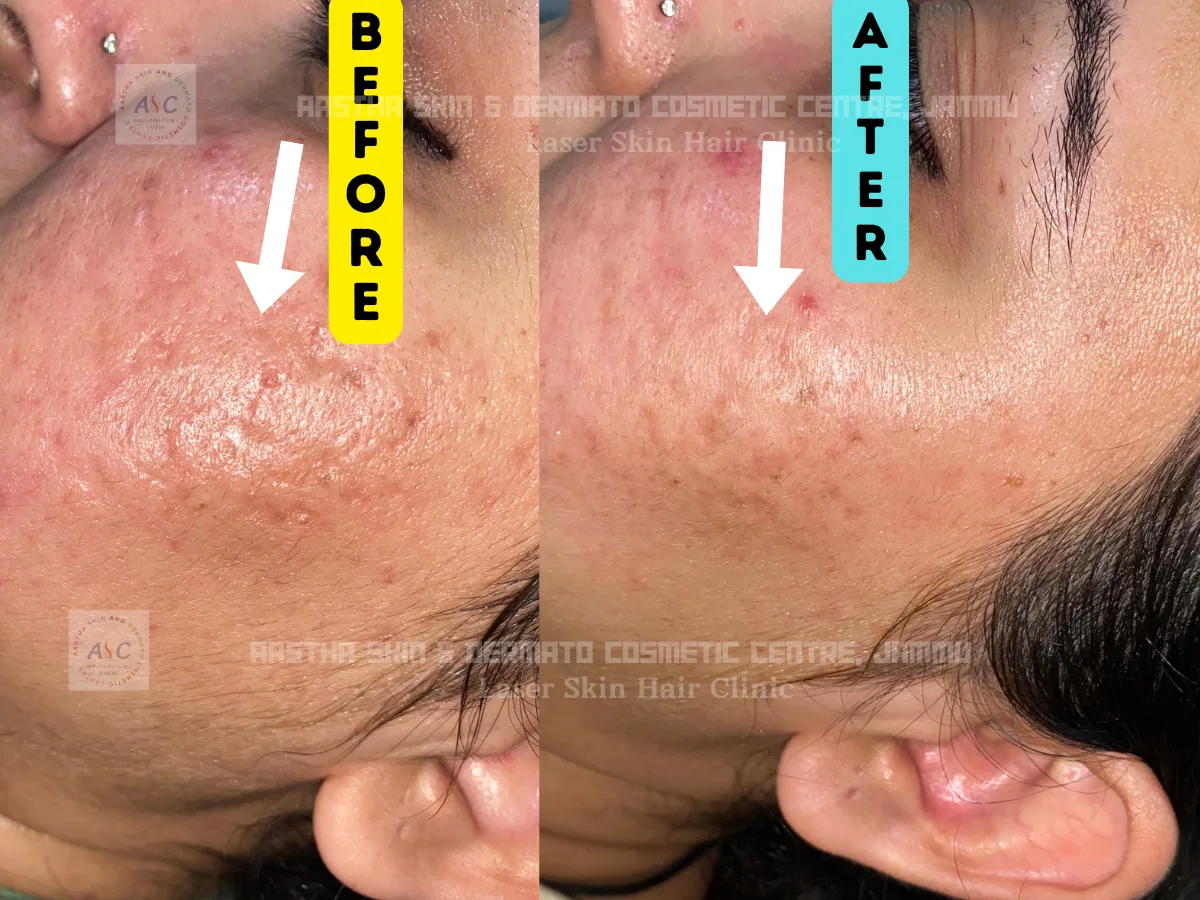
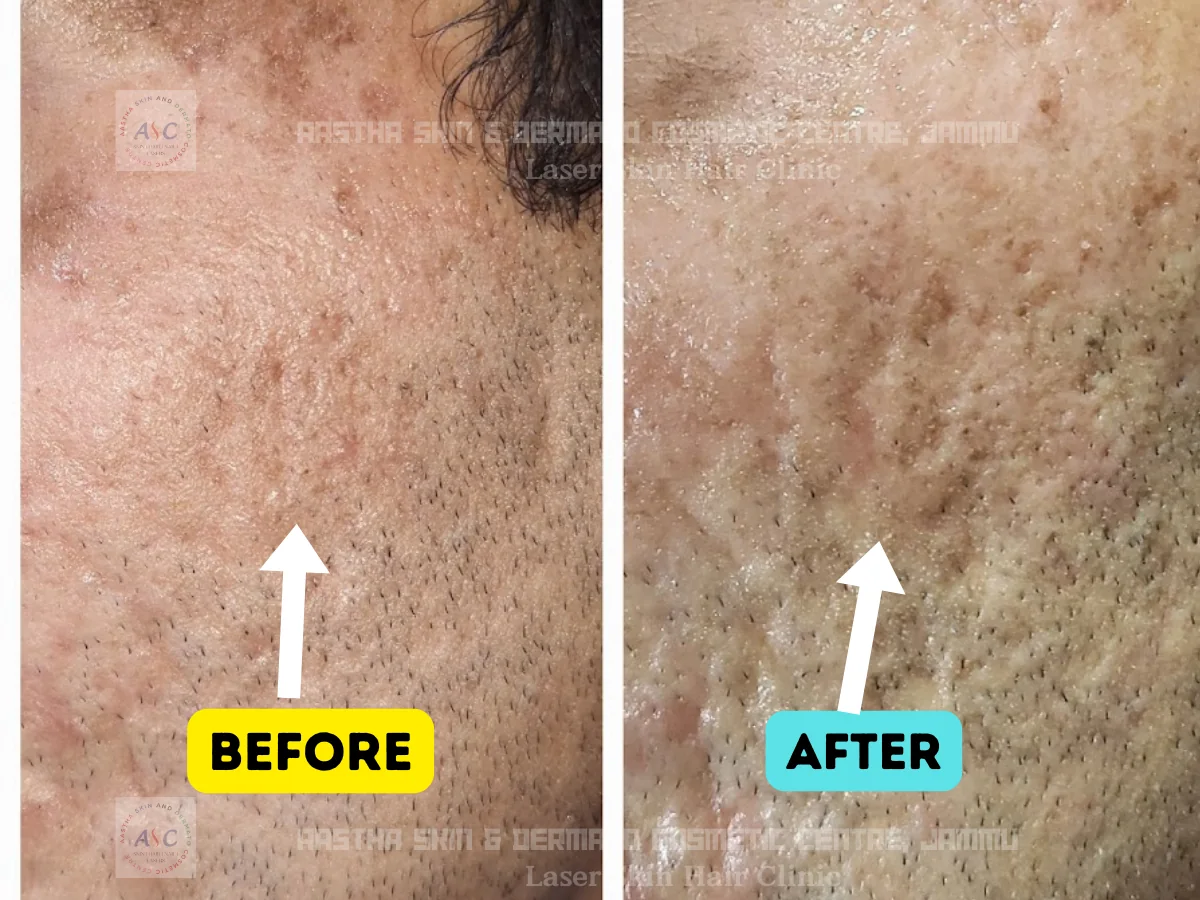
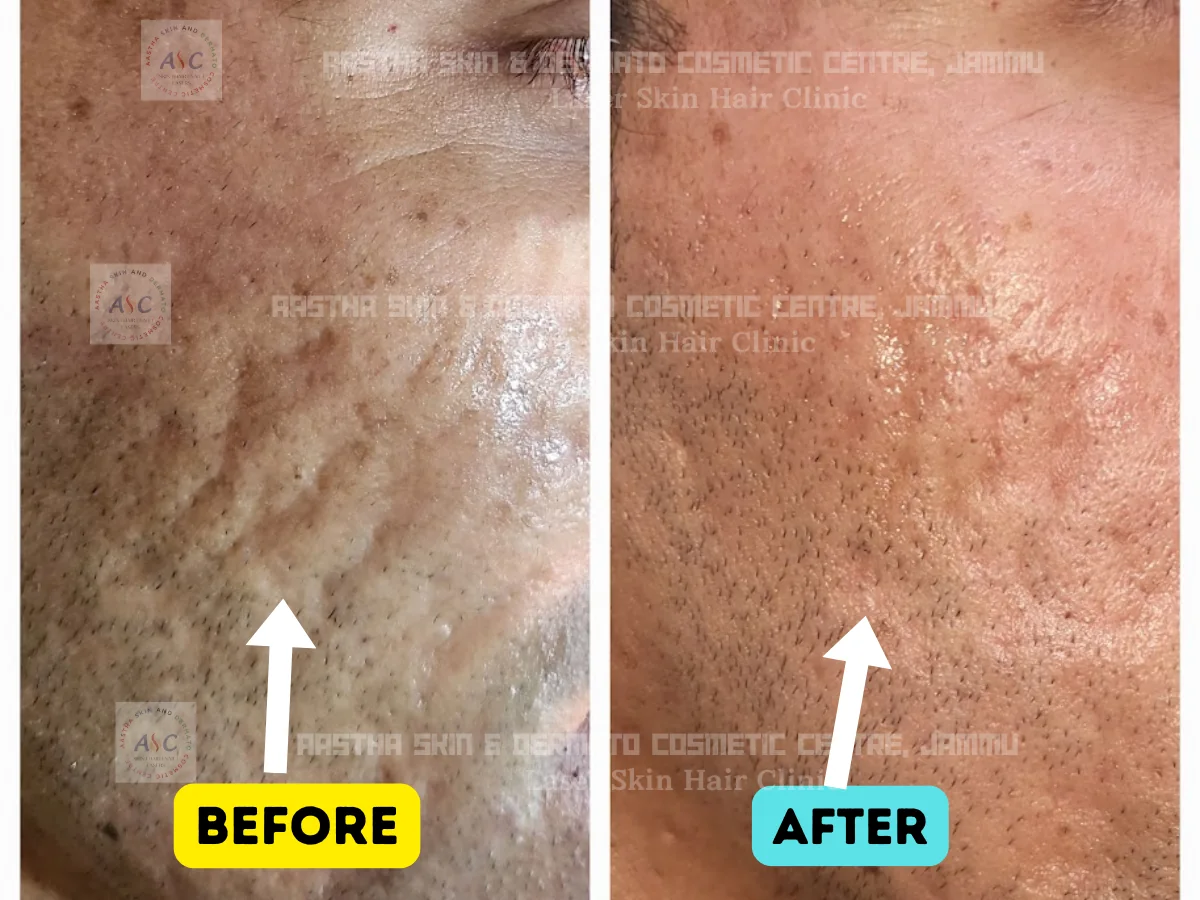
No acne-scar procedure can guarantee completely smooth or scar-free skin.
MNRF may produce:
- Shallower-looking scars
- Smoother texture
- Softer scar edges
- Reduced shadowing
- More even light reflection
- Gradual improvement in selected pores
Final improvement depends on the scar type, depth, number of sessions and individual healing response. Published studies generally show improvement rather than complete removal.
Can MNRF reduce enlarged pores?
MNRF may make selected pores appear less prominent by improving surrounding skin texture and firmness.
However, pores cannot be permanently opened, closed or erased. Their appearance is influenced by:
- Genetics
- Oil production
- Acne
- Skin elasticity
- Sun-related change
- Congestion
Ongoing acne and skincare management may still be required.
Can MNRF improve fine lines or skin rejuvenation?
RF microneedling has also been studied for fine lines, skin texture and facial rejuvenation.
Recent reviews report improvements in selected facial-rejuvenation outcomes, but the evidence includes varied devices and protocols, and some reviews have industry-affiliated authors. Results should therefore be presented cautiously rather than as proof of dramatic tightening or an alternative to surgery.
For patients mainly concerned about skin laxity, HIFU or non-invasive RF may be considered separately.
Is MNRF painful?
MNRF can be uncomfortable despite topical anaesthesia.
Patients may feel:
- Needle-prick sensations
- Heat
- Pressure
- Stinging
- Burning
- Tenderness
Pain varies according to needle depth, RF settings, facial area and individual sensitivity. In one split-face trial comparing MNRF with fractional ablative laser, MNRF produced greater procedural pain even though its early skin reaction was less intense.
Comfort varies between patients, so complete painlessness cannot be guaranteed.
Is anaesthesia used?
Topical numbing cream is commonly applied before treatment.
Depending on the treatment area and intensity, additional comfort measures may include:
- Cooling
- Treatment in smaller sections
- Pauses between passes
- Parameter adjustment
- Local anaesthesia for an accompanying procedure such as subcision
Patients should not use unprescribed high-strength numbing creams at home before visiting.
What downtime can occur?
Recovery varies with the needle depth, energy and number of passes.
Temporary effects may include:
- Redness
- Swelling
- Pinpoint bleeding
- Tenderness
- Tightness
- Dryness
- Fine crusting
- Rough texture
- Mild bruising
- Temporary darkening
The FDA lists redness, dryness, tightness, itching, peeling, discomfort, burning, bruising, bleeding and crusting among recognised microneedling risks.
Patients may need several days before the skin appears settled enough for an important event.
When will MNRF results become visible?
Scar improvement develops gradually.
Some early texture change may be noticed after healing, but more meaningful remodelling usually develops over the following weeks and months.
The final response is commonly assessed after a treatment course rather than immediately after one session. Studies frequently evaluate outcomes several weeks or months after the final treatment.
How many MNRF sessions are required?
Several sessions are commonly required.
The number depends on:
- Scar type
- Scar depth
- Scar distribution
- Treatment settings
- Skin response
- Previous procedures
- Combination treatment
- Desired level of improvement
Clinical studies have used different schedules. One Indian study in skin types III–V used four sessions at three-week intervals, while other trials have used wider spacing. This variation is one reason a fixed package should not be prescribed before assessment.
How far apart are sessions?
Treatment intervals are personalised according to:
- Intensity
- Healing
- Pigmentation
- Active acne
- Combination procedures
- Device protocol
- Upcoming sun exposure
Adequate time should be allowed for inflammation to settle and tissue remodelling to begin before the next session.
Treatment should be postponed when the skin remains irritated, infected or significantly pigmented after the previous appointment.
How does MNRF compare with fractional CO₂ laser?
MNRF
- Uses needles and radiofrequency energy
- Produces thermal zones beneath the skin
- May involve less surface disruption
- Can still be painful
- May cause redness, swelling and pigmentation
Fractional CO₂ laser
- Creates microscopic ablative columns
- Produces greater surface resurfacing
- Often involves more visible recovery
- May produce a greater pigment risk in deeper skin tones
- Can offer stronger improvement for selected scars
A recent meta-analysis of randomised studies found greater average scar improvement with fractional CO₂ laser but more pain, longer redness and a higher risk of post-inflammatory hyperpigmentation than MNRF.
Neither procedure is automatically better for every patient.
Can MNRF be combined with other acne-scar treatments?
Yes. Combination treatment may be more appropriate when several scar types are present.
Possible combinations include:
- Subcision for tethered rolling scars
- TCA CROSS for deep ice-pick scars
- Fractional CO₂ laser for selected texture concerns
- Chemical peels for superficial pigmentation
- Punch techniques for deep isolated scars
- Fillers for selected depressed scars
- Medical treatment for active acne
Combination research suggests that scar-specific sequencing may improve outcomes, but side effects can include redness, pain, swelling, erosion, pigmentation and acne flare.
Treatments should not be combined automatically in one appointment.
Can PRP or serums be delivered through MNRF channels?
Products should not be applied or injected through freshly treated skin merely because channels are present.
The FDA states that authorised microneedling devices have not been cleared for delivering cosmetics, medicines, vitamins or blood products such as PRP into the skin. The safety of combining devices with additional products depends on the product, procedure and regulatory setting.
Any combined procedure requires separate medical assessment, consent and infection-control planning.
Additional care and practical advice
Is MNRF suitable for Indian skin?
MNRF has been used in skin types III–VI and may offer a lower pigment risk than some ablative resurfacing procedures.
A review of RF and RF microneedling in skin of colour found mostly temporary pigment changes, with relatively few reports of permanent scarring. However, the authors also noted that much of the available evidence was not high quality.
Indian skin can still develop:
- Post-inflammatory hyperpigmentation
- Temporary lightening
- Prolonged redness
- Burns
- Scarring
Conservative settings, sun protection and appropriate aftercare remain important.
What are the possible side effects?
Expected temporary reactions may include:
- Redness
- Swelling
- Pain
- Tenderness
- Pinpoint bleeding
- Dryness
- Peeling
- Crusting
- Temporary roughness
- Acne flare
Less common complications include:
- Infection
- Herpes reactivation
- Persistent darkening
- Light patches
- Track marks
- Burns
- Scarring
- Prolonged pain
- Delayed healing
- Unsatisfactory texture
Microneedling safety reviews generally describe mild temporary reactions as most common, but uncommon and serious complications remain possible.
What serious RF-microneedling risks have been reported?
In October 2025, the FDA issued a safety communication after reports of serious complications with certain RF-microneedling uses.
Reported complications included:
- Burns
- Scarring
- Unwanted fat loss
- Disfigurement
- Nerve damage
- Need for medical or surgical treatment
The FDA advises patients to seek treatment from a licensed healthcare provider with training and experience in RF microneedling and to ask which device will be used.
This warning does not mean every treatment causes a serious injury. It means MNRF must be presented as a medical procedure with genuine risks, not as a casual beauty facial.
How care is planned
- Assessment comes before treatment selection.
- Options, limitations, aftercare and expected timelines are explained.
- The plan is adapted to diagnosis, skin type and medical history.
Choose a clinic in Jammu
Karan Nagar
Lane 2, Karan Nagar, near Amphalla Chowk, Jammu – 180005Doctor consultation:
Mon–Sat 11:00 AM–4:00 PM
Sun 11:00 AM–3:00 PM
Paloura Chowk
Top Paloura, opposite Government Senior Secondary School, Jammu – 181121Doctor consultation:
Mon–Sat 6:00 PM–8:00 PM
Sun 10:30 AM–12:00 PM
Frequently asked questions
Who may need to avoid or postpone MNRF?
Treatment may be unsuitable or require additional review when there is:
- Active bacterial, viral or fungal infection
- Active herpes
- Open wounds
- Active facial rash
- Severe inflammatory acne
- Uncontrolled diabetes
- Reduced immunity
- A bleeding or clotting disorder
- Blood-thinning medicine use
- Keloid tendency
- Significant eczema or psoriasis in the area
- Recent tanning
- Pregnancy or breastfeeding
- Allergy to needle metal or anaesthetic
- A suspicious mole or growth in the treatment area
These considerations are consistent with FDA patient-safety guidance for microneedling procedures.
Device-specific contraindications must also be followed.
Can patients taking isotretinoin undergo MNRF?
Patients must disclose current or recent isotretinoin use.
Older device guidance commonly recommends delaying microneedling during isotretinoin treatment and for a period afterwards. More recent research has explored selected energy procedures during low-dose isotretinoin, but protocols and evidence remain limited.
The decision should be made individually by Dr. Cheena Langer after considering:
- Isotretinoin dose
- Treatment duration
- Active acne
- Skin dryness
- Healing history
- Scar procedure intensity
Patients should not stop isotretinoin independently.
What should patients disclose before MNRF?
Tell the clinic about:
- Current acne medicines
- Isotretinoin use
- Blood-thinning medicines
- Diabetes
- Bleeding disorders
- Autoimmune disease
- Keloid history
- Cold sores
- Active infection
- Pregnancy or breastfeeding
- Metal allergy
- Anaesthetic allergy
- Previous laser or MNRF treatment
- Fillers, threads or facial surgery
- Pacemaker or implanted electronic device
Bring details of earlier acne-scar procedures where possible.
What aftercare may be recommended?
Aftercare depends on treatment intensity but may include:
- Cleanse gently
- Avoid scrubbing
- Apply the recommended moisturiser
- Use broad-spectrum sunscreen
- Avoid picking crusts
- Avoid makeup until advised
- Pause retinoids and exfoliating acids temporarily
- Avoid waxing or threading
- Avoid excessive heat and steam
- Avoid swimming until the skin surface settles
- Use only prescribed or approved products
Freshly treated skin may be more sensitive to retinol, glycolic acid, alcohol-containing products and other irritants.
When should the clinic be contacted?
Contact the clinic promptly for:
- Increasing pain
- Blistering
- Pus or discharge
- Spreading redness
- Fever
- Significant swelling
- Persistent numbness
- Facial weakness
- Skin breakdown
- Increasing dark or pale patches
- Symptoms that worsen instead of settling
Severe pain, facial weakness, major burns or rapidly spreading infection require urgent medical assessment.
The clinic’s telephone and WhatsApp numbers are not emergency-service numbers.
Get a clear plan for mnrf treatment for acne scars
Request a consultation with Dr. Cheena Langer at Karan Nagar or Paloura Chowk.
Medical disclaimer: Results may vary from person to person. This content is for informational purposes only and does not substitute a consultation with a qualified medical professional. Dr. Cheena Langer, MD is a registered medical practitioner.